Councilors Approve Policy Aiding Some Cannabis Applicants, Confirm Deliveries Possible in Haverhill

Last night, Haverhill city councilors approved their version of a state-mandated policy that aims to get cannabis store licenses in the hands of business owners incarcerated due to the federal government’s so-called “War on Drugs” or otherwise negatively impacted by it. People who fall into this category do not automatically get permits and must still go through an application process. Assistant City Solicitor Matthew D. Provencher informed councilors Haverhill previously opted in to cannabis delivery services, answering a question raised at a subcommittee meeting where the final policy was drafted, as WHAV reported. Brick-and-mortar businesses operating in Haverhill—there are currently four and none of them deliver—must renegotiate their licensing agreements with the city if they want to start. Council Vice President Timothy J. Jordan protested that cities do not receive tax revenue from deliveries brought in from outside.

City Lawyer: State Law Allows Cannabis Deliveries to Haverhill Homes from Out-of-Town Outfits

Delivery of cannabis to Haverhill homes from out-of-town is allowed under state law, the city solicitor says, but local stores may not make such deliveries until they first negotiate terms in their host community agreements with the city. At least that appears to be the opinion of City Solicitor Lisa L. Mead in a letter to the Haverhill City Council dated last Thursday. Councilors will formally hear the view during talks tonight on a state-mandated “social equity” policy that promises added benefits for shop applicants “disproportionately impacted by the War on Drugs.” The state requires the city to have a policy in place by May 1 or face penalties. Councilors are expected to hear recommendations from its Administration and Finance Committee that suggested changes to a draft policy during a meeting last week. One of the provisions, that qualifying applicants have “exclusive access” to delivery licenses for three years, brought concern by Councilor Melissa J. Lewandowski.

Haverhill Workshops Policy Helping Those Most Impacted By ‘War on Drugs’ Get Cannabis Shop Permits

As the state enacts legislation aimed at giving cannabis shop permits to those most negatively impacted by the, so-called, “War on Drugs,” Haverhill officials are facing a state deadline to decide how the city will support such applicants. According to a draft of Haverhill’s social equity policy, conditions to qualify include that a majority of a business’s owners have previous cannabis-related convictions, live in an “area of disproportionate impact,” meet certain income requirements, or have descendants from particular minority groups. These were specified as “Black, African American, Hispanic, Latino or Native American or indigenous.”

In an email to the City Council’s Administration and Finance Committee workshopping the policy, Councilor Melissa J. Lewandowski said the document should make clear belonging to the group prioritized by the state does not “guarantee” an applicant a license. With the state’s Cannabis Control Commission—or CCC—having set a May 1 deadline, councilors and City Solicitor Lisa L. Mead discussed at a Monday meeting whether to include sections on cannabis delivery businesses and community impact fees. Lewandowski raised concerns about whether to give applicants “exclusive access” to delivery licenses for three years because the city has yet to make specific legislation about the service.

Judge Karp Says Recent Cannabis Reform Law Probably Won’t Apply to Haverhill Retailer’s Case

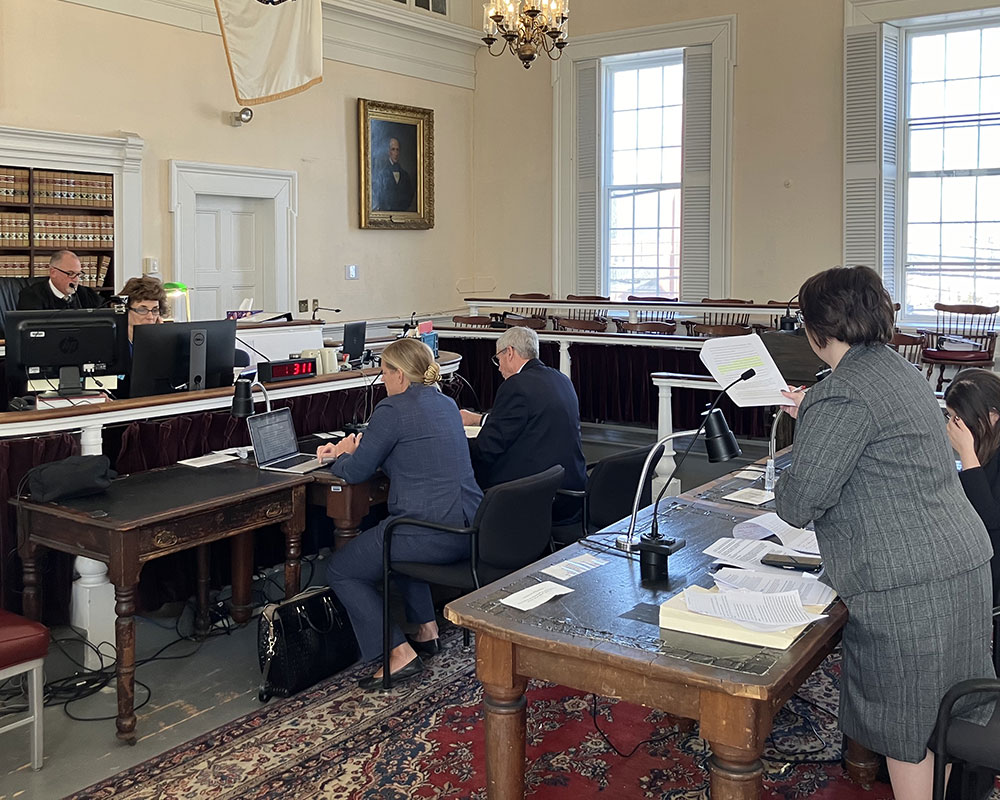
At an Essex County Superior Court hearing yesterday, Judge Jeffrey T. Karp said he was leaning toward rejecting Stem Haverhill’s claim that a 2022 change to state cannabis law should apply retroactively to the business’s 2018 agreement with the city. To operate in Massachusetts, recreational cannabis retailers must first create agreements with their host communities. Part of Stem’s agreement with Haverhill included certain fees to offset costs the city alleges are caused by the business’s existence. Those charges, totaling $887,488 over the past three years according to a July 2023 Stem press release, are the subject of a civil suit the shop filed in 2021. Stem owner Caroline Pineau told WHAV, “While our overriding hope was that Haverhill officials would follow the actions taken now by so many other municipalities, who have recognized that, indeed, legal cannabis presents no negative impacts, and have returned impact fee payments collected without evidence or justification, sadly, Haverhill did not do this, and the case is moving forward in court.”

Before hearing the trial, Karp asked both sides to help resolve five basic questions of law.

Northern Essex Community College to Host Free Cannabis Industry Insights, Career Expo Wednesday

Northern Essex Community College is having a free career fair Wednesday for those wishing to learn more about the cannabis industry. Called, “Cannabis Industry Insights and Career Expo: Cultivating Your Future,” the event features local cannabis pioneers and executives who have shaped the industry and who will share their journey, discuss current trends and offer advice. There will also be opportunities to network and chat with local companies about their unique roles and career opportunities. Employers attending will be presenting a variety of opportunities for job seekers, including entry-level, experienced and career changers. The Insights and Career Expo takes place Wednesday, Sept.

Haverhill Responds to Cannabis Retailer: Press Releases Don’t Overturn Judge’s Ruling

The City of Haverhill says the owner of a cannabis retail shop is trying to do through the media what a Superior Court judge has so far refused. Haverhill responded to a letter from Stem Haverhill, dated a week ago, that asks the city to put “impact fees” into a separate account and pay interest. The city does agree, however, with owner Caroline Pineau’s contention that it is working separately with other adult-use cannabis shops because the other three are not suing the city. Stem filed suit in Essex County Superior Court in 2021, saying it should not pay impact fees until the city proves the added cost of hosting cannabis businesses. “Shortly after filing the lawsuit, Stem filed an emergency motion seeking a hearing on a preliminary injunction to be relieved of the obligation to make community impact payments, or, to make those payments to an escrow account.

In Letter Last Week, Haverhill Cannabis Retailer Requests City Escrow, Pay Interest on Impact Fees

One of Haverhill’s cannabis retailers, whose suit against the city over collection of “impact fees,” has been going on for more than two years, last week formally asked the city to put fees into a separate account and pay interest. Caroline Pineau, owner of Stem Haverhill, said this past weekend she made the request in a letter dated Wednesday, June 26. She said all three years of her company’s impact fees—totaling $887,488—should be deposited in an interest-bearing escrow account. In addition, Pineau said her letter asks that future payments be suspended “until a clear and equitable payment policy is in place.”

“I find it disturbing that the city is negotiating on a store-by-store basis rather than establishing an across-the-board policy that treats all operators fairly and equally,” Pineau said in a press release. Impact fees, negotiated in host agreements between communities and retailers, are separate from optional local excise taxes of up to 3% on the retail sale of recreational cannabis.

Student Cannabis Use Stable, but Speaker Tells Haverhill, Product is More Potent, Easily Hidden

The sale of recreational cannabis has been legal in Massachusetts for almost five years and a person need not travel far before encountering a billboard pointing to the location of the nearest retail store. As a result, some parents, educators and medical personnel are asking “How is this affecting our kids?”

Last week, Richard J. Rosa of the Haverhill School Committee posed that question to Dr. Randi Melissa Schuster, director of School-based Research and Program Development at Massachusetts General Hospital Center for Addiction Medicine. Schuster responded that her research with more than 30,000 school-age kids shows the actual percentage of teens using cannabis has remained stable over the years. The decreased perception of risk, as a result of legalization, however, has led to an increase in the amount and types of cannabis being consumed by teenagers who are using. “The rates of cannabis use have remained largely stable over time.