Immigrant Protection Accord Includes State, Local Enforcement Rules

Lunn Decision Codified in Agreement Designed to Keep ICE Away from Newly Designated ‘Sensitive Places’
By Sam Drysdale

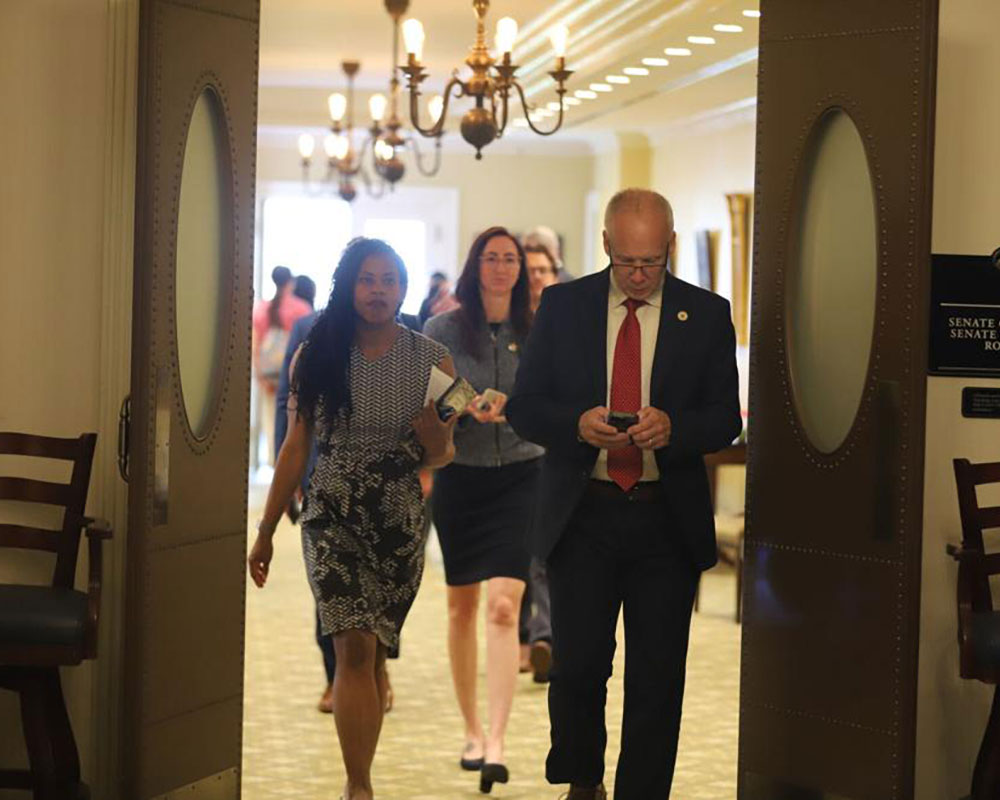
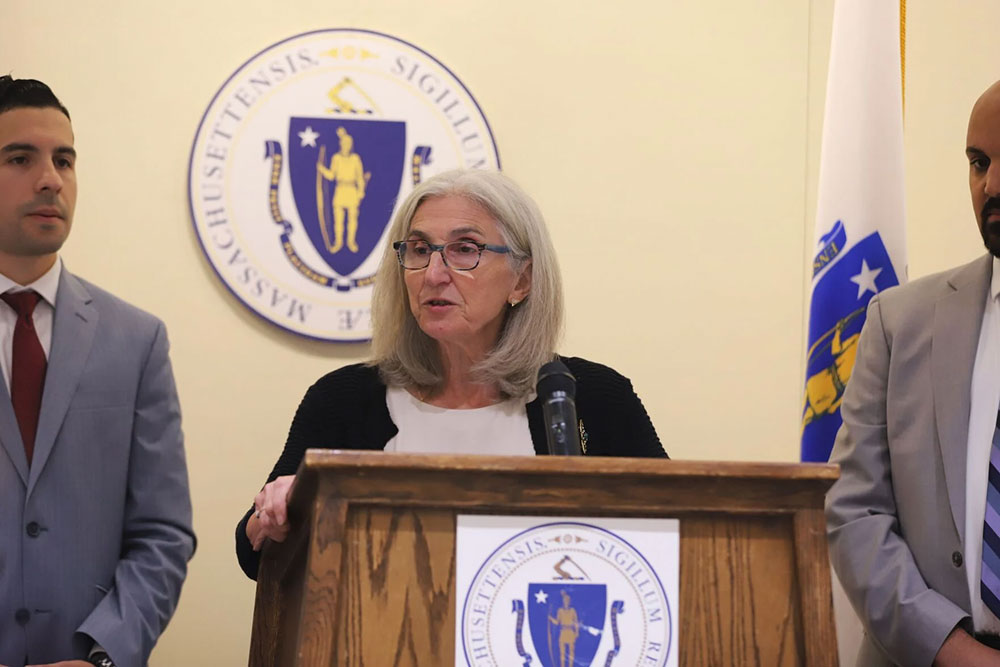
Legislative negotiators this week unveiled a compromise on the closely watched bill that would broaden protections against federal immigration enforcement, while preserving one key area of cooperation with federal authorities—the Department of Correction’s existing partnership with U.S. Immigration and Customs Enforcement. Rep. Andy X. Vargas said keeping the (Department of Corrections) agreement was consistent with the original proposal developed by the Black and Latino Caucus after hearing concerns from immigrant communities. “We heard feedback that, hey, they were coming to look for some guy that we knew committed a serious crime, but in looking for him, they picked up all these other people that just happened to be in the vicinity,” Vargas said. Asked why the existing corrections department agreement remains intact, Rep. Daniel Cahill said lawmakers thought it reduced the likelihood that ICE would conduct enforcement operations in neighborhoods while searching for people already facing deportation after serving felony sentences. The conference committee was tasked with reconciling differences between bills the House and Senate approved this spring.

Auditor: Senate’s ‘Poison Pill’ Could Undermine Question 1 Public Record Reforms

Auditor Blasts ‘Sole and Exclusive Remedy’ Language In Senate Bill
By Sam Drysdale

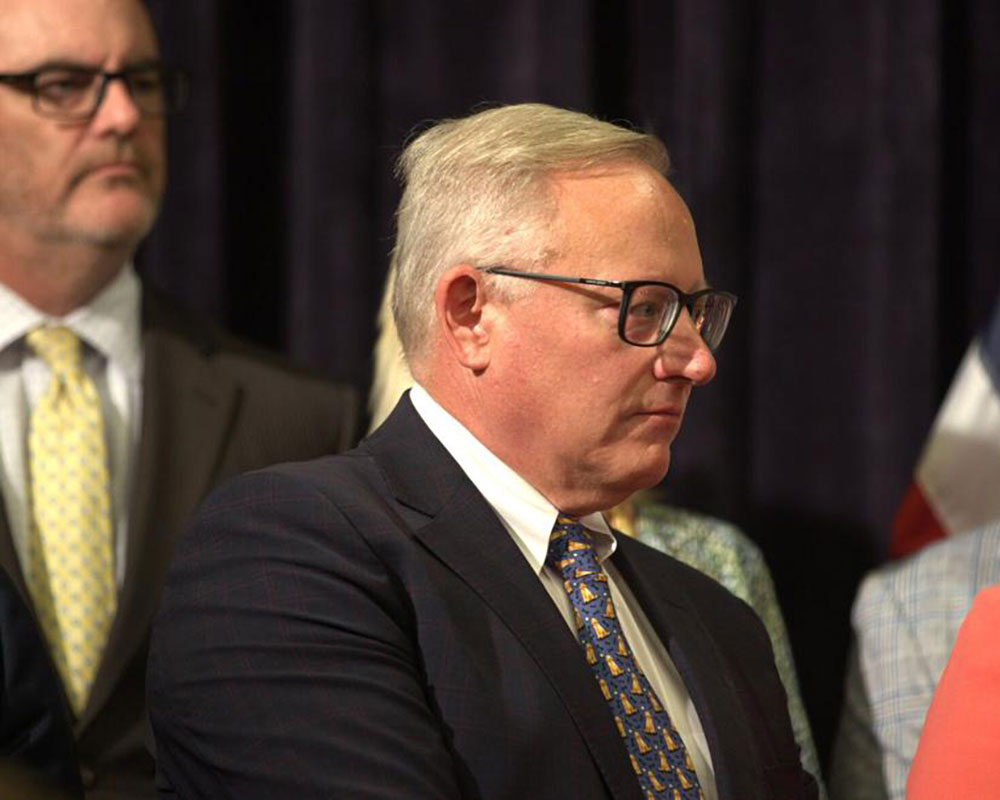
Auditor Diana DiZoglio says the Senate’s public records bill includes a “poison pill” designed to undercut November’s Question 1 before voters even cast their ballots. As senators prepare to vote Thursday on their version of a legislative public records bill, DiZoglio contends language declaring it the Legislature’s “sole and exclusive remedy” for obtaining records is intended to block any broader public records law approved by voters from ever applying to Beacon Hill. She called it an “unconstitutional” attempt to preempt the ballot initiative before Election Day, telling the News Service she would take it to court if necessary. “What stands out clearly is a poison pill the Senate is trying to pass along that makes it so any other law, including those passed at the ballot, wouldn’t be able to update their proposed changes,” DiZoglio said in an interview. The provision she points to says that “Notwithstanding…

Health Insurance Woes Reaching ‘Inflection Point,’ Commissioner Says

Caljouw: ‘We have things that we can and should do to try to tackle some of these issues’
By Alison Kuznitz

A day after approving sharp health insurance premium hikes, the state insurance commissioner reflected on the deteriorating landscape but pointed to policy levers that could start to bend the cost curve. Nearly 700,000 Bay Staters will see an average 10.4% premium jump in the merged market, where many individuals and small businesses get coverage, under rates for 2027 that the Division of Insurance approved Wednesday. The average family plan is now expected to incorporate total premiums that exceed $50,000, underscoring worsening healthcare affordability challenges. “I think I have a unique perspective managing the merged market in particular, but fully insured health insurance overall — the status quo is unacceptable,” Insurance Commissioner Michael Caljouw said at a Health Policy Commission meeting Thursday. “It’s getting worse and worse every day,” Caljouw continued.

Commission Rejects Cannabis Question Signature Challenge

By Katie Castellani

The State Ballot Law Commission Tuesday overruled an objection to nomination signatures supporting an initiative petition seeking to repeal the state’s adult-use recreational cannabis laws and ordered the question to be printed on November’s ballot. In a 16-page decision, the commission found that objector Kevin Gilnack, who filed the signatures challenge on behalf of the Stop the Repeal campaign that opposes the ballot question, “did not meet the burden of proof” to disqualify enough signatures to scrap the initiative petition. In a seven-page objection filed last week, Gilnack contended numerous signatures were “obtained through fraudulent means,” were not “genuine,” were “illegible,” excluded required addresses or included stray marks. As a result, Gilnack said, the committee behind the ballot question did not file the required 12,429 certified signatures. That marked the final batch of signatures petitioners had to collect after a panel of lawmakers decided that none of the initiative petitions brought before them this year warranted legislative attention.

DiZoglio Blasts New House Bill Limiting Scope of Legislative Audit

Auditor Says Effort to Block Disputes from Reaching Courts is ‘Craziness’
By Sam Drysdale

After a year and a half of lawsuits and public sparring, House Democrats Tuesday unveiled legislation that would essentially redefine how the 2024 voter mandate to audit the Legislature is carried out. The bill, which was quickly scheduled for a House vote Wednesday, represents one of the most significant developments yet in the long-running fallout from the 2024 ballot question that empowered Auditor Diana DiZoglio to audit the Legislature—a measure approved by 72% of voters despite fierce opposition from legislative leaders. House leaders are pitching the proposal as a transparency package that would establish new public access rights to legislative records while creating, what Speaker Ronald Mariano described as, a clear framework for legislative audits that respects constitutional separation of powers principles. DiZoglio sees it very differently. “The People have a co-equal right with the Legislature to create laws, and the courts have a constitutional right to adjudicate laws.

In Final Report on Sheriff Spending, IG Warns It’s ‘Time for The Chaos To Stop’

By Michael P. Norton

Inspector General Jeff Shapiro dropped his final report on county sheriffs’ spending Monday morning and it hit Beacon Hill with a thud, and blame to go around. The sheriffs’ budget process is “chaotic with chronic underfunding and illegal overspending,” Shapiro’s office said. Problems stem from a “lack of a common understanding of the role of the sheriffs’ offices,” with some legislators seeing their role as narrow and some of the elected sheriffs possessing a more expansive view. “How we got to this point no longer matters. Sheriffs’ offices have been Commonwealth agencies for more than 25 years.

State Senate Says it will Provide Audit Documents to Dizoglio

Tarr Raps ‘Disturbing Pattern’ of Seeking Court Opinions on Pending Questions, But Not the Legislative Audit
By Alison Kuznitz, Michael P. Norton

After resisting, the Senate plans to provide financial information that Auditor Diana DiZoglio has long requested as part of a probe of the Legislature authorized under a 2024 law. The Senate voted 33-6 Thursday to pass a resolution laying out the history of its dispute with the auditor and making it clear that senators are limiting the records they will provide to those discussed in recent litigation. Sens. Cindy Friedman and Paul Feeney said the branch is voluntarily handing over the records. “We are taking the affirmative step of providing those documents forthwith,” Friedman told reporters.

Campbell Will Authorize Dizoglio to Secure Counsel in Audit Law Case

AG Also Says She Won’t Represent the Legislature
By Colin A. Young

State Attorney General Andrea J. Campbell will tell Auditor Diana DiZoglio she can go ahead and secure outside counsel to represent her in a lawsuit against the Legislature, she said Tuesday. The Supreme Judicial Court last week gave Campbell 30 days to decide whether or not she would represent DiZoglio in the auditor’s pursuit of claims against the Legislature for alleged failure to respond to four specific requests outlined in a January 2025 memo. Those requests were part of an audit that DiZoglio attempted to conduct in keeping with a 2024 voter law that was approved by 72% of voters. Campbell, during an appearance on GBH Radio on Tuesday, said she will shortly send DiZoglio her response, “allowing her to proceed to appoint an attorney to then go into court with respect to those four things, and this will move forward.”

The four things specifically mentioned in the January 2025 memo and in last week’s court hearing were the official budgets for each chamber of the Legislature for fiscal years 2021, 2022, 2023 and 2024; copies of official audits of each chamber for the same fiscal years; a listing of all transactions related to each chamber’s balance forward line item for those fiscal years; and a list of all monetary settlement agreements entered into by each chamber with any current or former employees or elected members during the same timeframe. Campbell also suggested her office will no longer represent the Legislature, as it has during an attempt to have the courts toss DiZoglio’s lawsuit, moving forward.