

Lunn Decision Codified in Agreement Designed to Keep ICE Away from Newly Designated ‘Sensitive Places’
By Sam Drysdale
Legislative negotiators this week unveiled a compromise on the closely watched bill that would broaden protections against federal immigration enforcement, while preserving one key area of cooperation with federal authorities—the Department of Correction’s existing partnership with U.S. Immigration and Customs Enforcement. Rep. Andy X. Vargas said keeping the (Department of Corrections) agreement was consistent with the original proposal developed by the Black and Latino Caucus after hearing concerns from immigrant communities.
“We heard feedback that, hey, they were coming to look for some guy that we knew committed a serious crime, but in looking for him, they picked up all these other people that just happened to be in the vicinity,” Vargas said.
Asked why the existing corrections department agreement remains intact, Rep. Daniel Cahill said lawmakers thought it reduced the likelihood that ICE would conduct enforcement operations in neighborhoods while searching for people already facing deportation after serving felony sentences.
The conference committee was tasked with reconciling differences between bills the House and Senate approved this spring. Conferees said the compromise adopts the Senate’s broader approach to “sensitive locations,” expanding protections against warrantless civil immigration arrests from courthouses to include public schools, childcare centers and healthcare facilities.
The compromise also writes into statute principles established by the Supreme Judicial Court in Lunn v. Commonwealth, which held that Massachusetts officers lack the authority to detain someone solely based on a federal civil immigration detainer unless state law authorizes it.
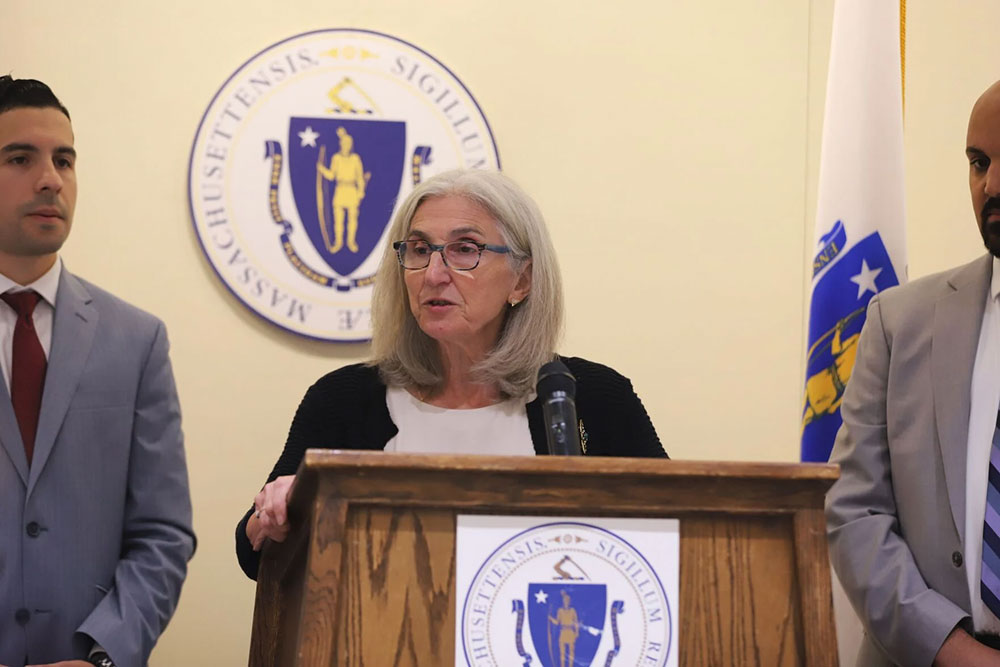
Sen. Cindy Friedman, Senate conference chair, said the bill goes beyond relying on court precedent by placing those limits directly in statute. “Lunn was a court decision, and it basically clarified that it is not the role of state or local government to engage in immigration enforcement,” she said. “That is a federal responsibility.”
The legislation would also expressly prohibit officers from asking about a person’s immigration or citizenship status during routine traffic stops solely for immigration enforcement purposes.
“This bill prioritizes the safety of immigrants and all Massachusetts residents from the weaponization of the federal immigration enforcement by the Trump administration,” Friedman said, describing a lengthy list of provisions included in the compromise.
Among them, she said, are new protections at “sensitive community locations,” a prohibition on new agreements between local and state governments and ICE, restrictions on questioning people about immigration status during routine policing, new civil liability for Immigration and Customs Enforcement agents, oversight of immigration detention agreements, protections for victims of crime and expanded safeguards for people held in state custody.
One of the most significant centered on where ICE officers could conduct warrantless civil immigration arrests. The House bill protected state courthouses, while the Senate extended those protections to additional settings. Friedman explained evolving reports of immigration enforcement activity drove negotiators to expand the bill.
“The House created a bill that was very, very—it was real solid,” she said. “Once that was passed, though, lots of other information started to come out.”
“We started to see and hear about people going to pick up their kids in school and being taken off the streets, things happening in courthouses where ICE was coming into a courthouse and just picking somebody up while they were in the middle of a trial or there to be a victim,” she continued. “We started to look at how can we ensure protections in all the places that we have some control over.”
The agreement requires acceptance by both branches before it can be sent to Gov. Maura Healey, who earlier Wednesday said the measure was “top of mind” and expressed hope it would reach her desk before the Legislature concludes scheduled formal sessions this week.