Sen. DiZoglio Champions ‘Cocktails for Commonwealth’ Restaurant Aid Bill; Mirra Lends House Support

Restaurants could sell sealed containers of mixed drinks with to-go orders under a bill filed last week by Sen. Diana DiZoglio. DiZoglio’s bill is intended “to expand revenue-generating options in response to the COVID-19 economic crisis for local establishments licensed to sell alcoholic beverages.” Mized drinks aren’t covered under Gov. Charlie Baker’s April 3 law that allows restaurants and bars to sell limited quantities of beer and wine, in their original containers, with takeout and delivery orders. Restaurants remain barred from serving customers in their dining rooms under a March order from Baker. Some restaurateurs and bartenders have been advocating to be allowed to serve cocktails with their takeout orders as well, a measure that has been allowed in some other states, including Rhode Island. An online “Cocktails for Commonwealth” petition had more than 400 signatures as of Monday morning.

Podcast: Sen. Diana DiZoglio Wants More Legislative Input into Baker Business Reopening Plans

With legislation moving forward in the state Senate to help businesses affected by the COVID-19 pandemic, state Sen. Diana DiZoglio says she and other legislators felt cut out of Gov. Charlie Baker’s recovery program. DiZoglio made the revelation Thursday when she appeared as a guest on WHAV’s morning program. “It’s not a situation where we have been able to participate in those discussions, necessarily, you know. When this thing is planned, which is rolled out by the lieutenant governor and the secretary of economic development, alongside the governor, those conversations on the advisory board were being had with not one legislative representative being able to speak during those meetings. We were able to listen, but we were not allowed to speak, and give input,” she explains.

Judge Lifts Baker Order Closing Gun Retailers; Takes Effect Saturday

A federal judge will temporarily lift a Gov. Charlie Baker executive order requiring firearm retailers to close their physical businesses during the COVID-19 state of emergency. U.S. District Court Judge Douglas Woodlock issued a preliminary injunction Thursday in a case that Massachusetts residents, gun shop owners and gun rights groups brought against the Baker administration. The online case docket indicated the order will take effect at 12 p.m. Saturday. State defendants in the case will have until May 28 to file their rebuttals seeking dismissal of the lawsuit. Plaintiffs argued the administration’s decision to include gun retailers in the list of non-essential businesses that must shutter their stores amid the pandemic, but allowing other locations such as liquor stores to stay open, was unconstitutional.

Mass. Cities, Towns Locked out of Federal Lending Support Program

No cities or towns in Massachusetts are eligible for a new Federal Reserve Bank relief program, according to a group of U.S. senators, who are seeking to expand eligibility for the COVID-19 credit and lending effort beyond the nation’s states and its largest cities and counties. In an April 17 letter to Federal Reserve Chair Jerome Powell that was released over the weekend, Massachusetts Sen. Elizabeth Warren and six other Democrats said that by limiting the central bank’s purchase of short-term notes to cities with at least one million residents and counties with at least two million residents, most local governments around the country would be excluded from the Municipal Liquidity Facility program, “including some of the hardest-hit communities.” Haverhill Mayor James J. Fiorentini echoed the sentiment in a social media post over the weekend. “Without a Federal bailout, states and cities, including Massachusetts and Haverhill, face a devastating round of budget cuts next year. Our revenues are down drastically and our expenses are up,” the mayor wrote. The senators noted that the City of Boston, with a population of nearly 695,000, “will see tens of millions in lost revenue and unexpected expenses related to the immediate public health response and the long-term effects of restarting the local economy.” They referenced a National League of Cities report that found 2,100 cities are planning for major budget shortfalls this year due to tax revenue losses and increased spending tied to COVID-19.

State’s Highest Court Reduces Ballot Signature Requirements, Extends Filing Deadline

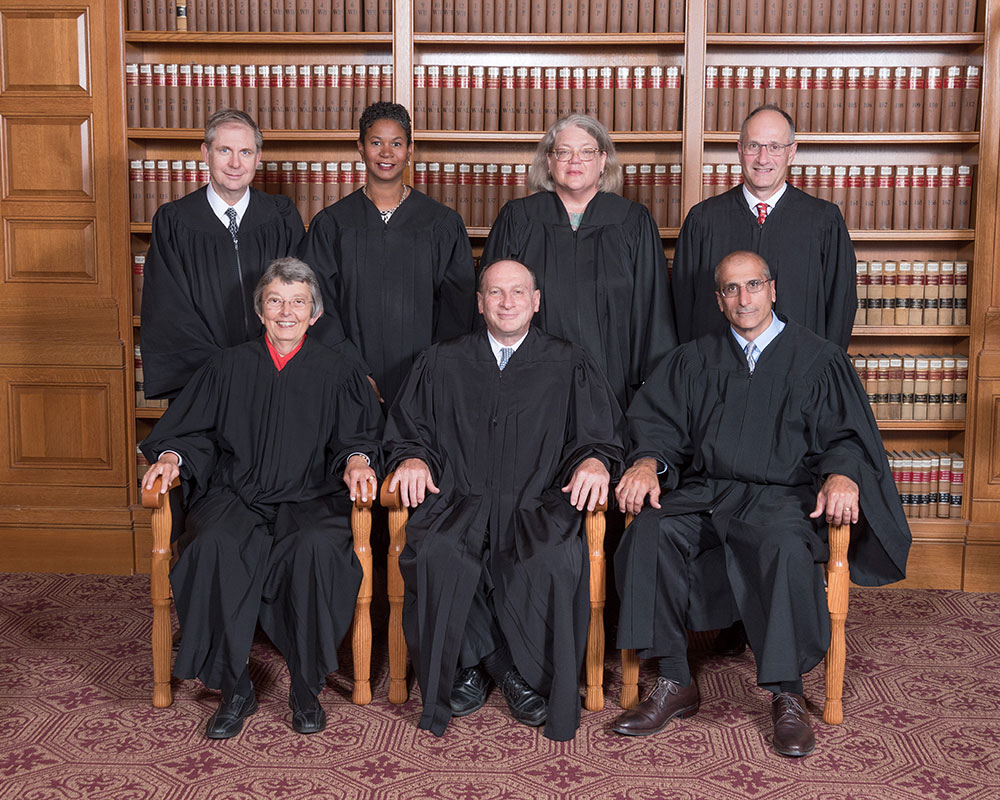
The state Supreme Judicial Court has ordered signature requirements for all candidates seeking to appear on the Sept. 1 primary ballot be reduced by 50 percent in order to ensure easier access to the political process for office-seekers struggling to collect signatures from voters during the coronavirus pandemic. The state’s highest court, in its ruling Friday afternoon, also extended the deadline for candidates for state and county offices to submit signatures to local election clerks from April 28 until May 5, and will allow for some use of electronic signatures. The new May 5 deadline is consistent with the deadlines for candidates running for federal office. “We emphasize that the declaration we make and the equitable relief we provide is limited to the primary election in these extraordinary circumstances, which is the sole subject of the case before us, and does not affect the minimum signature requirements for the general election this year or for the primary elections in any other year,” Chief Justice Ralph Gants wrote in the court’s decision.

Gov. Baker: ‘We Are in The Surge;” Mass. ‘Pretty Well Positioned to Deal with This’

Two and a half months after the first confirmed case here, and as the total number of COVID-19 cases passes 28,000 and the number of deaths from the virus approaches 1,000, Gov. Charlie Baker said Wednesday that the surge of COVID-19 patients that Massachusetts has been preparing for has arrived. “I would say at this point in time, based on the conversations we’re having every day with our colleagues in the hospital community, that we are in the surge, yes, the governor said in response to a question at his daily coronavirus press conference Wednesday. In Haverhill, Mayor James J. Fiorentini said Wednesday, 245 residents have tested positive, 68 have recovered, 74 are in long-term care facilities, nine are hospitalized and two have died. The state has been working with the health care sector since at least February to be as prepared as possible for the influx that is expected to put hospitals, health care workers and emergency medical providers under tremendous stress. Hospitals have added to their bed capacity, beds that typically would be occupied by people who had elective procedures have been kept open, and the state has established field hospitals in a convention center and arena in case traditional hospitals become overwhelmed.

U.S. Attorney Lelling Launches Third Investigation of Soldiers’ Home Where at Least 25 Died

Federal prosecutors have launched an investigation into whether the state-run Holyoke Soldiers Home failed to provide the veterans who live there adequate care—both during the coronavirus outbreak that has killed more than a dozen and generally. U.S. Attorney for Massachusetts Andrew Lelling announced Friday that his office and the U.S. Department of Justice’s Civil Rights Division have opened an investigation into the Holyoke facility “to examine whether the Soldiers’ Home violated the rights of residents by failing to provide them adequate medical care generally, and during the coronavirus pandemic.”

At least 25 veterans who lived at the Holyoke Soldiers’ Home died in recent weeks amid an outbreak of the coronavirus. It’s unclear exactly how many of the deaths are attributable to COVID-19—the Baker administration did not respond to requests for updated numbers on Wednesday or Thursday. “It would be difficult to overstate our obligation to the health and well-being of elderly and disabled military veterans and, by extension, to their families. The federal Civil Rights of Institutionalized Persons Act specifically protects the rights of those confined in state facilities like the Holyoke Soldiers’ Home,” Lelling said.

State’s Congressional Delegation Blasts Washington for Lack of Medical Supplies

One day after Gov. Charlie Baker revealed Massachusetts has received only a fraction of the ventilators it requested from the national stockpile, the state’s congressional delegation slammed the federal response as “grossly insufficient.”

Both senators and all nine representatives urged the Federal Emergency Management Agency to fulfill the Baker administration’s request for about 1,700 ventilators, warning in a letter that hospitals in Massachusetts are on the verge of exhausting the life-saving equipment they have available. “We have heard from hospitals in the state that they will run out of invasive ventilators in a matter of days and will run out of other ventilators that can be adapted for use for COVID-19 patients within a week,” lawmakers wrote. “Given the growing need in Massachusetts, approving and sending only 100 ventilators to Massachusetts is grossly insufficient, and FEMA can and must do more to help Massachusetts during this crisis,” they continued. Many state leaders across the country have been at odds with Washington over the federal response to the coronavirus pandemic, voicing frustration with the amount of resources that have flowed from the Strategic National Stockpile and — as Baker did — with being outbid in their efforts to purchase protective equipment. One week ago, Baker announced Massachusetts would receive more than 1,000 ventilators from the stockpile by the end of the first week in April, which he described as “a big positive step forward in the right direction.” However, on Sunday, the governor said only 100 ventilators had arrived so far.