Voters Subject Governor, Legislature to Public Records Law, No Guarantee Lawmakers Will Comply

by Chris Lisinski, CommonWealth Beacon
November 4, 2026
ALL EYES, especially those that want to pry, now turn to the Legislature. Massachusetts voters on Tuesday gave overwhelming approval to a ballot measure subjecting the House, Senate, and governor’s office to the state’s public records law. There’s just one catch: In the remaining eight weeks between the election and the start of the next lawmaking term, Democrats who control the Legislature might erase what voters decided in a landslide. Although lawmakers have been openly grousing about the measure for months, they opted not to mount a formal opposition campaign, and few voters were swayed by legislative complaints about its constitutionality. The measure wound up smashing its way to victory.
Political Map is Anyone’s Guess After a Democratic Wave In The Midterm Elections

By THOMAS BEAUMONT Associated Press

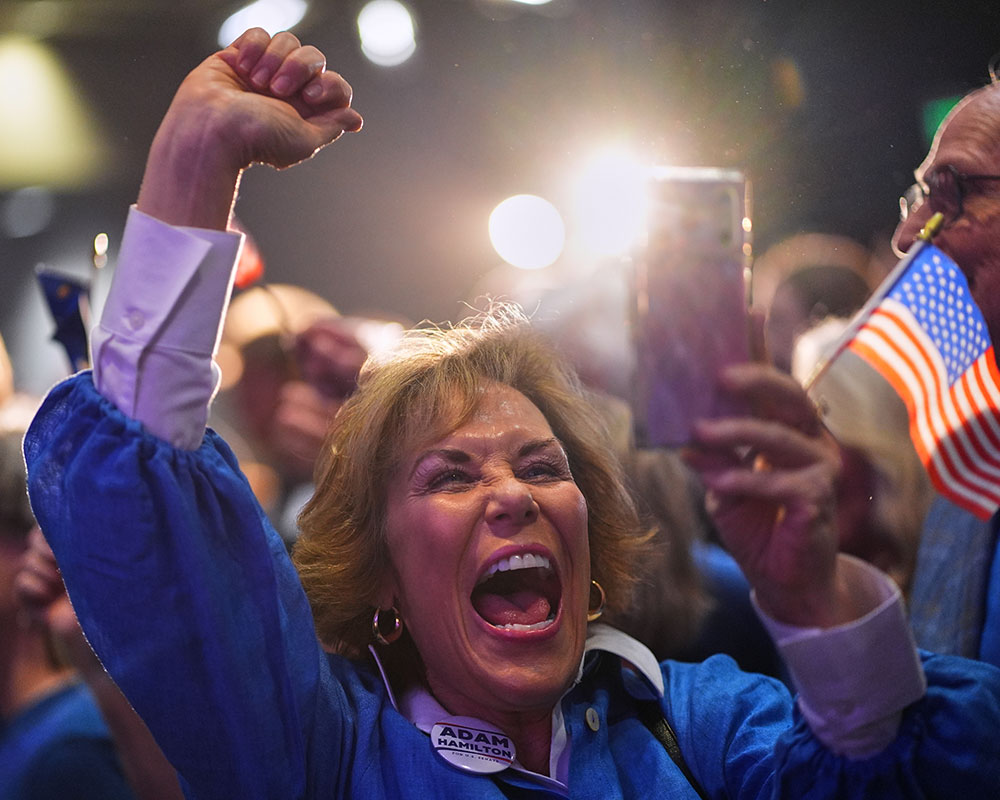
WASHINGTON (AP) — Voters took a wrecking ball to the traditional map of political battlegrounds, electing Democrats in states that were long considered reliably Republican. Kansas, South Carolina, Texas, Ohio and Iowa, all states Republican Donald Trump easily won two years ago in the presidential election, backed Democrats for the U.S. Senate and occasionally governor, too, on Tuesday. Now the question is whether the results represent a durable tectonic shift — one that could reshape the path to the presidency — or a fluke stemming from Trump’s deep unpopularity and voters’ unhappiness with the rising cost of living. Either way, Republicans are reeling from losses they never expected at the start of this election year. Kansas backed a Democratic senator for the first time since 1932 as Adam Hamilton, a Methodist megachurch pastor, defeated Republican Sen. Roger Marshall.

New Hampshire’s SCOTUS Appeal Puts Student Voter ID Law in Flux

by Ethan DeWitt, New Hampshire Bulletin
October 20, 2026

Whether high school and college students in New Hampshire can use their student identification cards to vote on Nov. 3 remains up in the air, after the New Hampshire Attorney General’s Office took the matter to the U.S. Supreme Court last week. The request, filed by the state Attorney General’s Office Thursday, asks the Supreme Court to reverse an Oct. 2 order by Judge Joseph Laplante of the U.S. District Court of New Hampshire to halt the new law. House Bill 323, signed by Gov. Kelly Ayotte in April, removed high school, college and university identification cards from the list of acceptable ways for voters to prove their identity when casting a ballot.

Question 3 Debate Highlights Disagreements Over Fixing Lack of Competition in Mass. Elections

by Hallie Claflin, CommonWealth Beacon
October 13, 2026
PERHAPS THE MOST controversial of the nine ballot questions that will appear before Massachusetts voters in November is Question 3, which would replace partisan primaries with all-party primaries for most state, federal, county, and district offices, allowing the two candidates receiving the most votes to advance to the general election. CommonWealth Beacon hosted a debate Tuesday night at Northern Essex Community College in Haverhill between Danielle Allen, a Harvard University professor who founded the group advancing the ballot initiative, and Jordan Berg Powers, chair of Voter Rights MA, which is opposing the ballot question. The debate comes as election day nears, and the question draws high-profile supporters and opponents. Former Republican Gov. Charlie Baker and former Democratic Gov. Deval Patrick recently united in favor of the question, while other high-profile figures, including US Rep. Ayanna Pressley and Sen. Ed Markey, have lined up to oppose all-party primaries. A recent CommonWealth Beacon survey conducted by the MassINC Polling Group found that Question 3 had the support of 43 percent of likely voters, with 36 percent opposed and 20 percent undecided.

Mass. Voting Group Praises SCOTUS Decision as Win for Democracy

By Kathryn Carley

Voting rights advocates in Massachusetts said the Supreme Court’s rejection of the Trump administration’s attempt to restrict mail ballots is a major win for democracy. The justices left in place a preliminary injunction preventing the U.S. Postal Service from withholding mail ballots from states refusing to upload personal voter data to a new and untested online portal. Celia Canavan, executive director of the League of Women Voters of Massachusetts, said President Donald Trump has no authority to determine election rules. “This power remains in the Congress and within the states, and the United States Postal Service also does not have the right to change mail-in voting processes,” Canavan asserted. Canavan argued changes to mail-in ballots this close to the midterm elections would have created chaos for state officials but contended it may be the point.

Pappas and Sununu Prevail in Primaries, Setting Up Expensive Fight for U.S. Senate

by Ethan DeWitt and Maya Mitchell, New Hampshire Bulletin
September 8, 2026

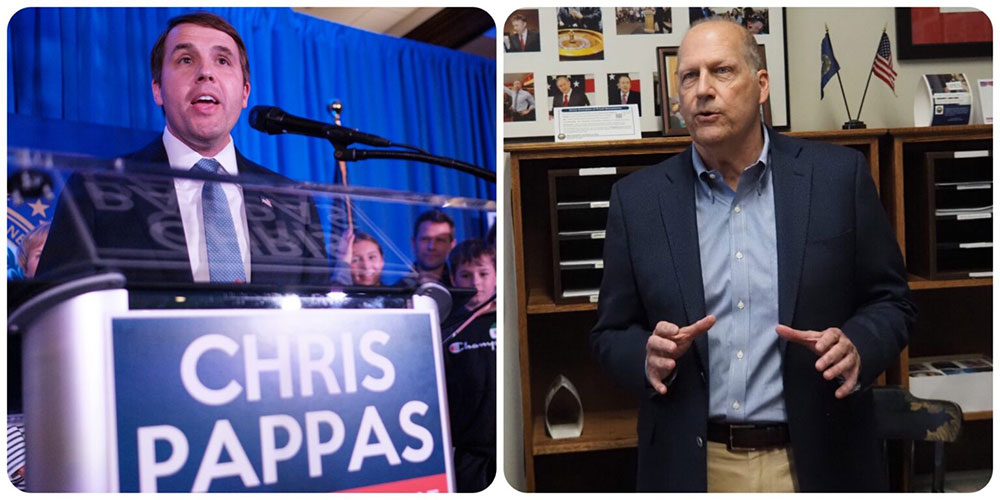
Democratic U.S. Rep. Chris Pappas will face off in November against Republican former Sen. John E. Sununu to be U.S. senator, after the two candidates prevailed in their respective primaries Tuesday. The results, projected by the Associated Press shortly after 8 p.m., solidified what will likely be a bare-knuckled, expensive general election fight for the Senate seat, which is open after Sen. Jeanne Shaheen announced her retirement. Polls suggest the contest between Pappas, the current representative for the 1st Congressional District, and Sununu could be close, and both candidates had been positioning themselves for the general election months before the primary. As the polling has tightened, the race has taken on increasing significance to Democrats’ chances to flip control of the U.S. Senate, with Pappas’s shrinking advantage drawing national attention. In winning his primary, Sununu held off a challenge from Scott Brown, the former U.S. senator from Massachusetts who has since moved to New Hampshire, after Brown attempted to align himself with President Donald Trump and run to Sununu’s right.

On Primary Day, Will New Hampshire Democrats and Republicans Stick To Playbooks?

by Ethan DeWitt, New Hampshire Bulletin
September 8, 2026

In 2006, Carol Shea-Porter stunned the New Hampshire Democratic establishment, defeating a well-funded, party-backed opponent, Jim Craig, in the primary and then ousting Republican Jeb Bradley in the 1st Congressional District. And she did it with a progressive platform. “There was a sense of: We don’t want Washington coming here and telling us what to do,” recalled Kathy Sullivan, the New Hampshire Democratic Party chairwoman at the time. Twenty years later, some progressive Democrats are hoping to replay that victory in New Hampshire’s state primary. And they can point to uncanny parallels.