
(Additional photographs below.)
A Haverhill City Council subcommittee is recommending strict controls on surveillance technology, who has access and for how long, but not necessarily an outright ban on automatic license plate readers and other outdoor cameras.
The Council’s Public Safety Committee took 90 minutes of testimony Thursday night, weighing individual privacy and security against faster crime fighting and lifesaving. Before any final action is taking by the full City Council, committee members reassured opponents the city is on a path to cancel its contract with Flock Safety. Councilor Thomas J. Sullivan, one of four subcommittee members, summarized the city is “keep its options open.”
“We are not immediately replacing the technology. We will study guidelines, guardrails, come up with an ordinance,” he said.
The consensus of both committee members and other councilors present appeared to favor a compromise set of rules based on a proposal from City Solicitor Lisa L. Mead and variations on strict controls already adopted by the Cities of Quincy and Somerville.
Ward 3 City Councilor Devan M. Ferreira, who is not a Public Safety Committee member, but asked for the review, said Somerville and Quincy offer similar protections. She explained they require justification, require City Council approval before purchase, place limitations on what data is collected and who may access collected information, set limits on what the vendor may use, restrict how long data may be kept and other conditions.
“What I like about this in particular is that there is a public process and notification and a really solid base of information that’s expected to be provided by whatever city department is proposing adding surveillance tools to their toolbox,” she explained.
Passion was expressed by speakers on both sides.
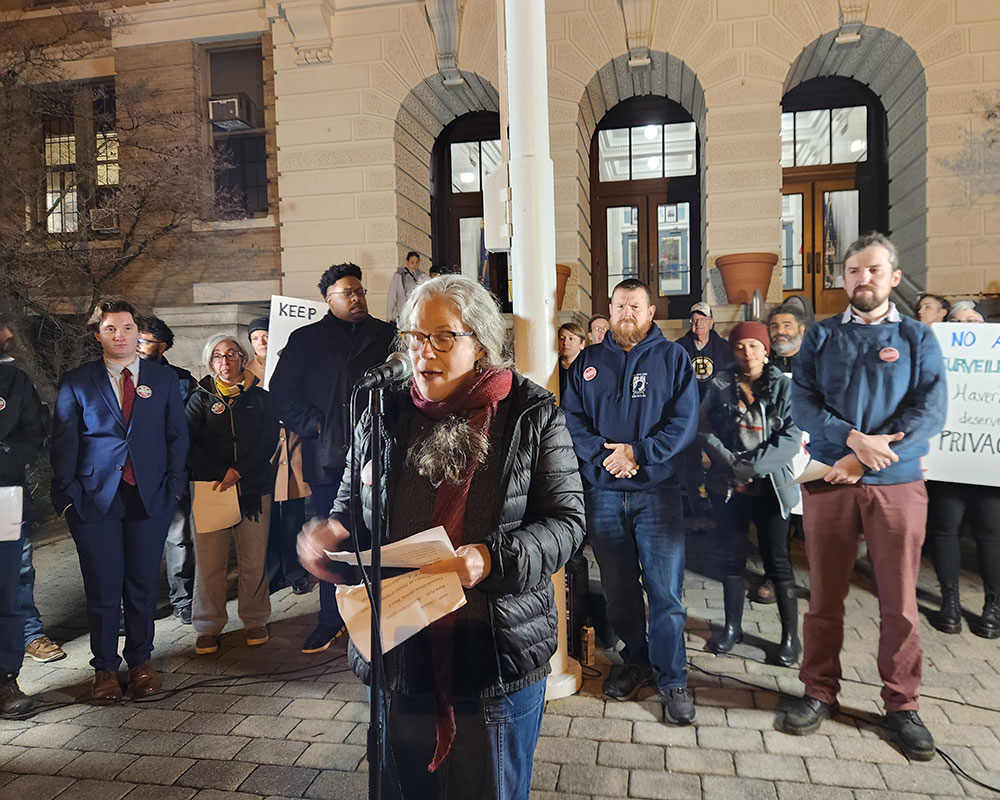
Opponents, most from the Merrimack Valley Project, which staged a press conference beforehand on the steps of City Hall, spoke first. Allison Carvalho called for a ban on automatic license plate readers and for guardrails on surveillance technology. They said a review of public records suggest inadequate reasons for using Flock Safety data and only one in five since 2022 listing a required case number.
“Case numbers did improve to about 80% in September and October, just recently after public attention was brought. That shows oversight works and it shows why we can’t just depend on who’s paying attention,” they said.
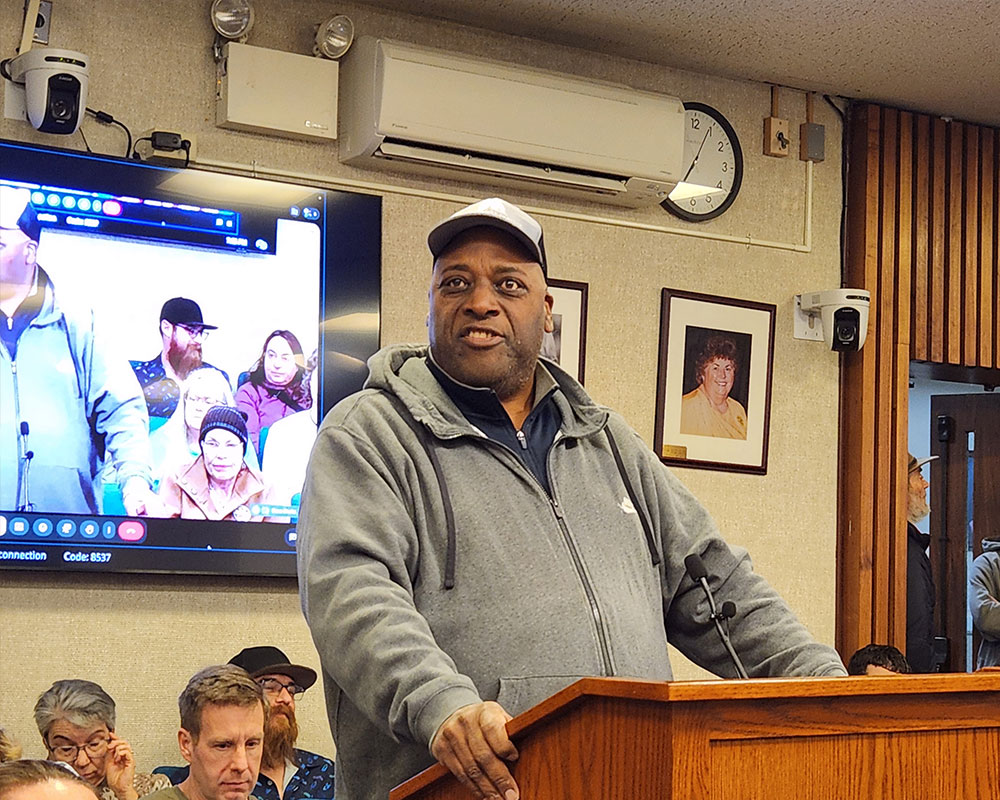
Among other opponents, Dale Leone said camera money would be better spent on reducing poverty, Bill Taylor called use of the technology since 2023 without a public hearing “a massive breach of the public trust” and Sherry Spaihts-Mohns decried people being tracked without a judicial warrant.
Those speaking in favor of license plate readers were retired Haverhill Deputy Police Chief Donald Thompson and Detective John Moses. Thompson said he’d be satisfied with proper guidelines, while Moses said time is of the essence when conducting an investigation.
“Everybody can go and say, “Hey, I’m going to call the registry and get a list for every Ford Escort in Haverhill.’ That would take me eight weeks to go through that list for something that can be done in 10 minutes,” he said.
Retired Fire Chief William F. Laliberty told councilors cameras have helped solve arson cases during his time and since, noting the recent Steven Street mill blaze as an example.
Ward 1 Councilor Ralph T. Basiliere called for the Committee to recommend the full Council “create robust, lasting and enforceable guardrails.” He received backing from Committee Chair Michael S. McGonagle and fellow members Sullivan and Shaun P. Toohey.
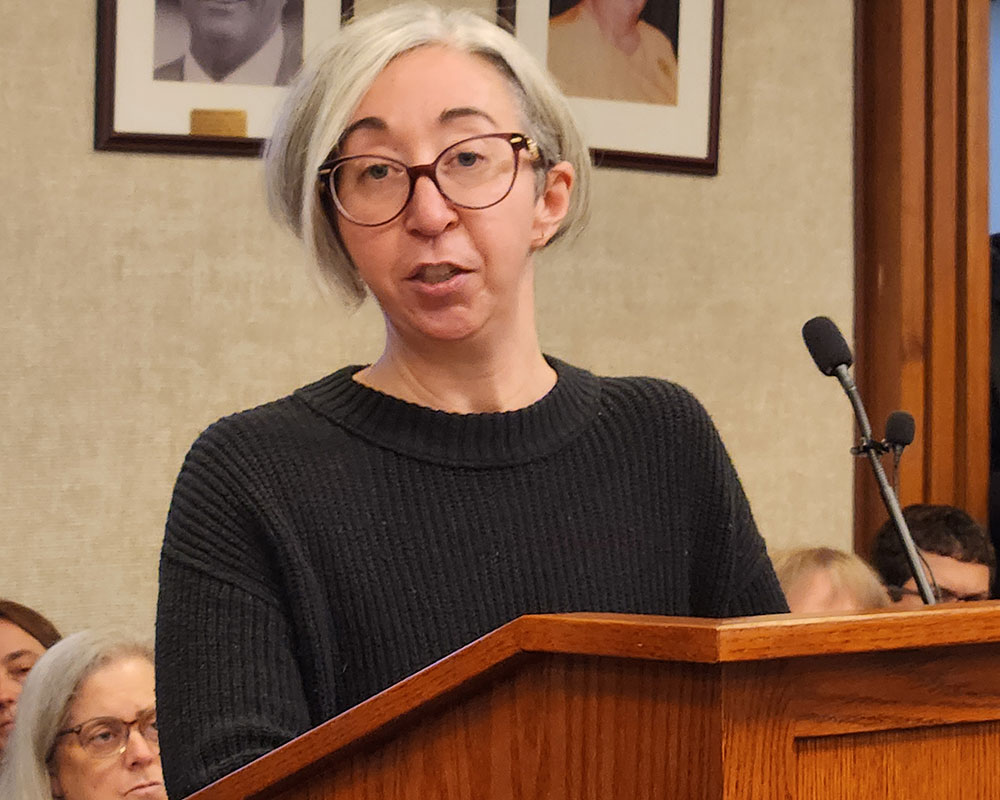
Alison Carvalho details findings of a review of public records regarding use of Flock Safety cameras. (WHAV News photograph.)
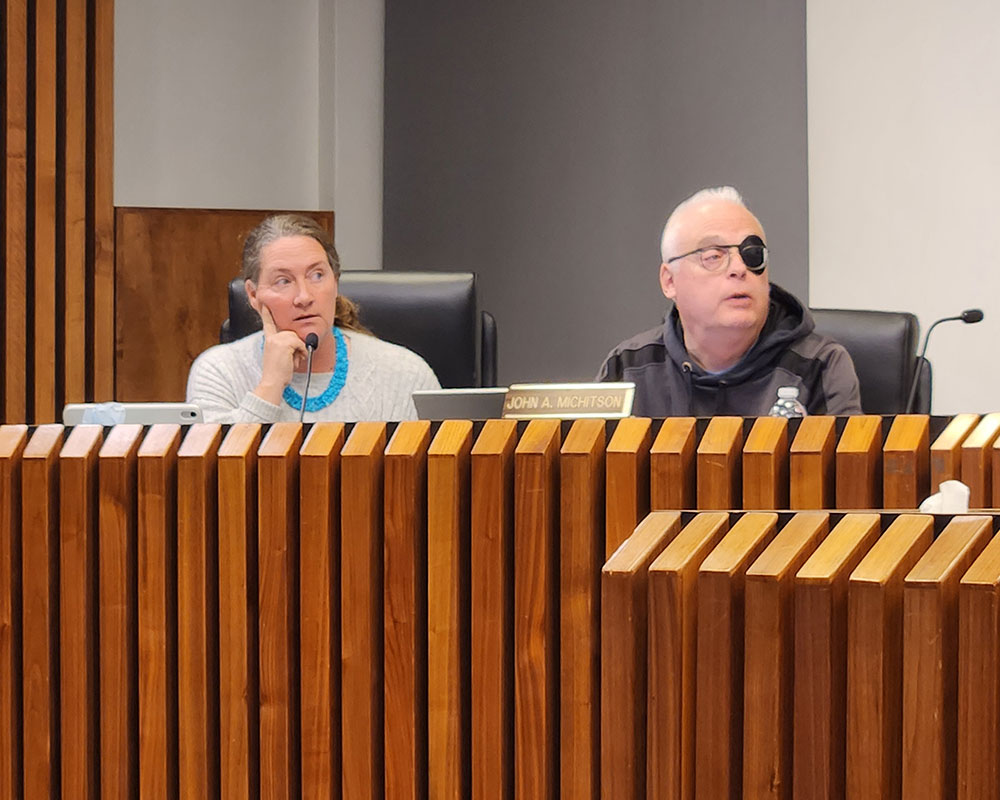
Ward 3 City Councilor Devan M. Ferreira and Council Vice President John A. Michitson. (WHAV News photograph.)