Audit Law ‘Standoff’ Flares Up With Complaints, Allegations; DiZoglio Accuses AG of Part of a ‘Cover Up’

By Ella Adams

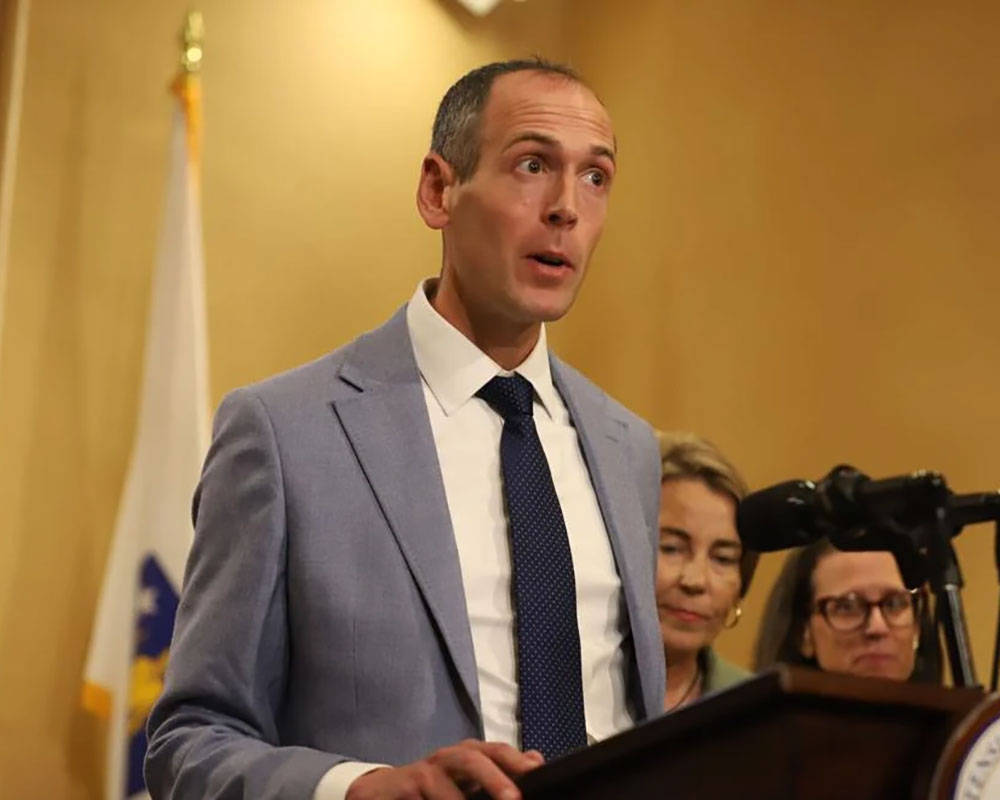
Attorney General Andrea J. Campbell again suggested Tuesday the future of the legislative audit law is in the hands of Auditor Diana DiZoglio, who in turn accused Campbell of “public corruption,” continuing a saga that has metamorphosed since more than 70% of voters cast ballots in favor of the review more than a year ago. “I hope the voters get exactly what they voted for,” Campbell said when asked on GBH’s “Boston Public Radio” whether voters would “get what they voted for” should the audit back-and-forth continue between her and DiZoglio. “I hope the auditor stops the standoff,” Campbell added. A majority of voters passed the DiZoglio-backed law enabling her office to audit the Legislature in November 2024. Top Beacon Hill Democrats have pointed to concerns about the constitutional validity of the law ever since, and Campbell and DiZoglio have gone back-and-forth during respective media appearances about each others’ roles in the process.

Sen. Payano Calls Bill Shifting Credit Card Fees to Shoppers ‘A Practical Path Forward’

By Katie Castellani

Consumers could pay more when they use their credit cards after state senators last week advanced a bill to allow businesses to pass along those processing costs. Sen. Pavel M. Payano, co-chair of the Committee on Consumer Protection, said the bill offers “a practical path forward.”

“One that supports our small businesses while making sure consumers are clearly and proactively informed about surcharges,” he said in a statement to State House News Service. Senators drafted the bill that would allow sellers to charge customers paying with a credit card a fee that is no greater than the seller’s cost to process the payment. If the bill passes, Massachusetts would join most states with laws allowing businesses to charge credit card surcharge fees. Five senators voted to advance the bill and Sen. Kelly Dooner didn’t vote “yes” or “no.”

The bill, which draws from three proposals, also requires sellers to notify customers of the credit card surcharge for in-person, online purchases and transactions made over the phone.

State Health Insurance Signups Slightly Outpace Those Who Dropped Coverage

By Alison Kuznitz

The number of Massachusetts residents who dropped insurance accessed through the state Health Connector was roughly balanced out by those who signed up for plans through the state exchange. Nearly 23,000 Bay Staters terminated their coverage so far this open enrollment cycle, while 23,596 people newly signed up for plans through the Connector, said spokesperson Jason Lefferts. The volume of residents who chose not to renew for 2026 is more than double the decline that the Health Connector recorded at this point last cycle, when 11,300 people dropped their coverage, Lefferts said. It is unclear where those members may have alternatively sought insurance, though Executive Director Audrey Morse Gasteier has warned people may be tempted by junk coverage. The number of new enrollees is about 2,000 fewer than at this point last year, according to the Connector’s open enrollment dashboard.

Mass. Flu Levels ‘Very High,’ 35% Have Received Flu Shots

By Alison Kuznitz

The state’s top public health official is urging Bay Staters to get their flu shot as an influenza strain causes huge case spikes across the globe. “We’re concerned about this new variant that is circulating,” Public Health Commissioner Robbie Goldstein said on WCVB’s “On the Record” show Sunday. “We saw it circulating in Europe and Japan and other parts of the world, and it’s here in Massachusetts,” Goldstein continued. “The thing that people should know is that it’s not too late to get vaccinated. Getting vaccinated protects you from severe disease, from ending up in the hospital, from death from flu.”

Subclade K, a mutated strain of the influenza A virus, is driving widespread cases across Europe.

Healey Explores Options to Cover Residents Losing Health Insurance

By Alison Kuznitz

As thousands of residents drop coverage or hunt for higher-priced plans through the Massachusetts Health Connector, Gov. Maura Healey said Tuesday officials are exploring how to connect residents with other insurance options. “We’ve seen premiums expected to increase two or three times,” Healey said on GBH News’ Boston Public Radio. “Now the good news—and I hope to be out with more word on this soon—we’re working to see how we can come up with ways to cover people.”

Tuesday marked the Health Connector’s deadline for Bay Staters to sign up for plans that start on Jan. 1. It’s been a tumultuous open enrollment cycle, with more than 10,000 people already dropping coverage as they grapple with sticker shock from premium spikes.

DPU Opens Probe into Volatile Massachusetts Energy Bills

By Michael P. Norton

Nine weeks after Gov. Maura Healey requested a review, the Department of Public Utilities on Monday opened an investigation of all delivery charges on electric and gas bills in Massachusetts. The department said its probe “will examine the causes of bill volatility and promote a greater understanding of rates for customers to take greater control over their energy bills.”

The DPU has so far in 2025 reduced the budget of the Mass Save three-year plan, required mitigation for last winter’s gas bills and implemented new electric rates to reduce winter costs for residents who use heat pumps. The new investigation will explore whether to establish limits on how much charges can increase from month to month, and whether certain charges should be eliminated, consolidated or “redesigned as a fixed charge.”

The efforts come as residents and businesses cope with rising utility and other bills that are contributing to a higher cost of living in Massachusetts. “Last winter, customers saw their bills spike, with some paying 50% more than they did the previous winter,” Healey wrote in an Oct. 14 letter to the DPU.

Finegold Says Trump Effort to Stop AI Regulation Defies Commonsense

State Sen. Barry R. Finegold is calling President Donald Trump’s attempts to block states from regulating artificial intelligence misguided, arguing “guardrails” must be in place. Finegold, Senate chairperson of the Joint Committee on Economic Development and Emerging Technologies said last week AI offers “incredible opportunities to improve lives…but with such far-reaching technology, common-sense protections are essential.”

“Unfortunately, President Trump is once again trying to block states from putting these guardrails in place. It’s no surprise that opposition to this misguided approach is bipartisan. When AI has negative impacts, state governments must step up. For example, I supported legislation that became law last year, protecting Massachusetts ticket buyers from AI bots that were driving up prices and freezing out consumers.”

Finegold noted social media as an example of unchecked technology, pointing to federal law that “shields platforms from liability with blanket protections.”

He quoted tech ethicist Tristan Harris as warning, “We didn’t regulate social media early enough, and now we’re living with the consequences.

Massachusetts Continues to Deliver Full SNAP Benefits Despite Fed Threats

By Alison Kuznitz

All Massachusetts residents eligible so far this month for federal government food assistance have received their full SNAP, or food stamp, benefits. Gov. Maura Healey said Monday afternoon the state delivered on what is formally known as Supplemental Nutrition Assistance Program despite Washington gridlock. “My message to every SNAP recipient out there is this: Forget the noise that you’re hearing from Donald Trump. Forget the noise about further appeals to the Supreme Court,” Healey said at a press conference in her office. “I want you to know, because of the actions that we took, SNAP benefits have been restored to your cards.