Haverhill Schools Highly Rank Early Literacy Program Despite Cost During Expected Tight Year

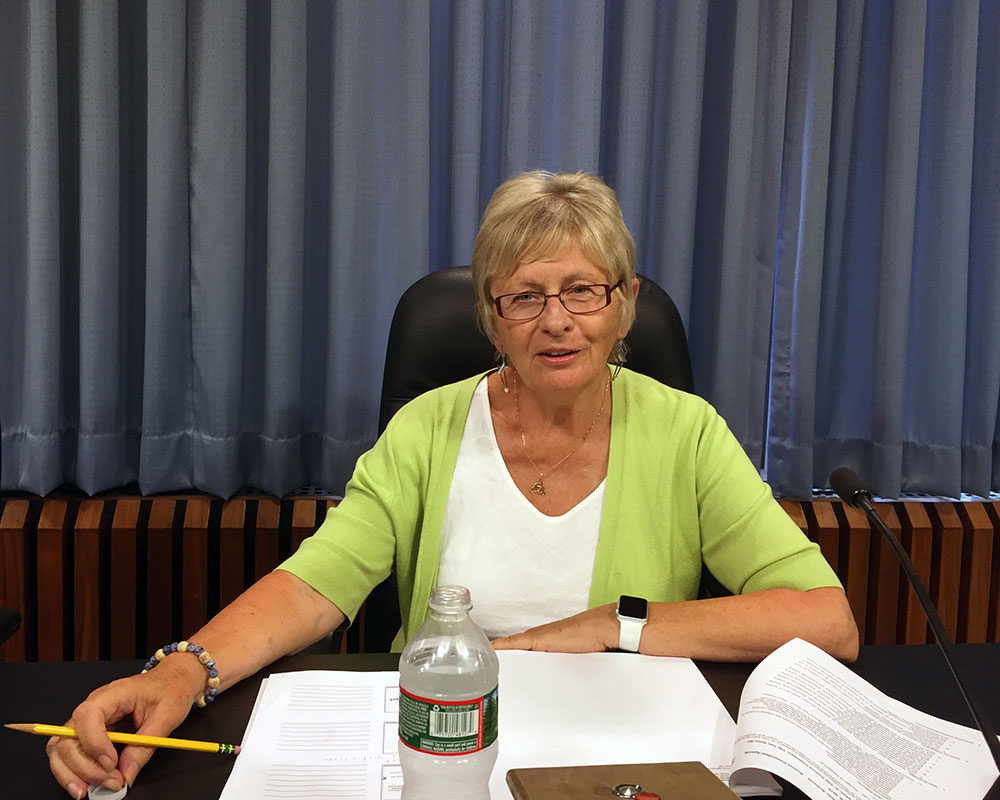
While the Haverhill district grapples with potential cuts, public school officials made the case last week to include a new early literacy program in the budget. With the Department of Elementary and Secondary Education requiring lower-income districts to demonstrate how they will improve outcomes with state aid, Superintendent Margaret Marotta said of “Wit & Wisdom,” “that’s our most pressing lever for change.”

With a projected $10.7 million deficit next year, Chief of Teaching, Learning and Leading Bonnie Antkowiak told School Committee members it would cost an additional $421,000 to adopt the program districtwide, $260,000 plus professional development for kindergarten to second grade and $138,000 plus professional development for third to fifth grade. Marotta added they could roll it out over three years, spreading out costs. Marotta called “Wit & Wisdom” the district’s “priority among priorities.” The committee motioned, in the words of member Richard J. Rosa to “approve this presentation we received tonight about our student opportunity act money as our priority for the Haverhill public schools.”

While Marotta said the district has already invested heavily in four of the five areas detailed in the 2019 Student Opportunity Act, they still need to work on a “comprehensive approach to early literacy.”

“We are really looking to improve our early literacy programs and our early literacy scores,” she said. As WHAV reported, teachers who have piloted “Wit & Wisdom” spoke favorably of the program at a school committee meeting in late January.

Officials, Advocates to Discuss Lead Poisoning at April 24 Panel Discussion in Haverhill

State Rep. Andy X. Vargas, journalist Dan Kennedy and health advocates will discuss the problems posed by lead during a panel discussion next week in Haverhill hosted by Lead Free MA. Lead Free founder Andrea Watson, one of the speakers, left Flint, Mich. for Massachusetts after the 2016 water crisis. The city’s drinking water became tainted with lead, prompting then-President Barack Obama to declare a state of emergency. Watson said she was personally affected.

Haverhill Schools Won’t Accept Out-of-District Students; Marotta Explains How Enrollment Shifts

Citing a lack of space, Haverhill Public Schools will not allow out-of-district students to attend this coming year. According to Superintendent Margaret Marotta, the school board also voted no to inter-district school choice in the past several years for similar reasons. Asked by member Yonnie Collins if there might be capacity this time, Marotta explained how enrollment starts misleadingly low, then quickly grows. “Generally, in the summer, we have some space in our classrooms, but we receive kids all school year long, and we particularly have a big bump of kids, oftentimes in early October, and in January as well,” she said. Due to families arriving from the Dominican Republic in early October—Marotta speculated flights become a little cheaper then—and a “big influx” of people moving in January, Marotta said class sizes swell.

Residents Say Zoning Board Member Falsely Called Them Racist, Demand Accountability

Reporter’s note: WHAV intended “Why One Haverhill Zoning Board Member Voted ‘Yes’ on a Proposal Nearby Residents Opposed” to explain how the views, beliefs and experiences of a public official led her to vote a certain way. Wood School residents said a zoning board member should face consequences for, what they believe, was a false accusation of racism after she told WHAV why she voted yes on a variance they opposed at a January meeting. Board of Appeals member Kassie Infante told WHAV in a recent interview she was not calling them racist, but rather takes a “different angle” on how race affects housing access. “Whether or not race is explicitly talked about, it’s always at play,” she said. “I never, once, called anyone racist.”

At the Jan.

Councilors Honor Outgoing Haverhill Conservation Commissioner LaCroix; Two Partners Join Board

As city officials celebrated filling the new volunteer Conservation Commission partner role, outgoing Commissioner Phillip LaCroix received an official citation for his 20 years of service at last week’s City Council meeting. “This is the first time we have conservation partners, who will help do the work that the conservation commission just can’t get to, or do some digging on things that are upcoming for them,” Mayor Melinda E. Barrett said. In February, as WHAV reported, city councilors considered creating the partner role to help the board keep up with its growing responsibilities, particularly guiding the city on how to use its open spaces. “It is not a commission post that you mail in,” Barrett said of LaCroix’s job. “It is a lot of work, a lot of study and a lot of effort, and Phil has exhibited all during his 20 years, and the city is grateful for his work and efforts.”

Environmental Health Technician Robert E. Moore Jr., who works closely with the commission, said it usually takes three years to train new commissioners due to the complexity of the regulations they navigate.

Haverhill School Committee Member Sullivan May Vie for Early’s Whitter Tech Seat at April 25 Meeting

In a surprising turn, Haverhill School Committee member Gail M. Sullivan appears to be under consideration for Richard P. Early Jr.’s seat on the Whittier Regional Vocational Technical High School Committee. Interviews for Early’s seat will now be held at the committee’s next meeting on April 25. Member Richard J. Rosa said City Solicitor Lisa L. Mead initially advised members to turn Sullivan away. “She felt that we could not elect one of our own, even though we had been doing that for many years,” he said at last night’s meeting. After Mead consulted the state ethics commission, Rosa said it turned out the School Committee could appoint one of its members to the Whittier Tech school board.

Haverhill’s Michitson Calls on State Not to Weaken Rules Requiring Remote Access to Public Meetings

The governor is trying to change the provision of the Open Meeting Law that requires cities and towns to provide remote access to public meetings, but one elected Haverhill official thinks the plan is shortsighted. Haverhill City Councilor John A. Michitson told his colleagues Tuesday night the state should leave the pandemic-era policy alone. “She basically wants to give an opt-out to cities and towns because they may have technical difficulties, and I would like to recommend that we send a letter to our delegation keeping the current policy at the state level,” he said. Healey’s proposed Municipal Empowerment Act allows hybrid meetings, but does not endorse remote access or ensure it will continue. “It’s far too important, right, to have people have an opportunity that can’t make it here, to call in, and then if we’re on business travel, for example, we can still call into the meeting and do our job, fulfill our responsibility,” Michitson said.

Orgs Seeking Federal Money from Haverhill to Help Low-Income Residents Present April 16 and 18

Two more groups of organizations vying for federal money set aside to help low- to moderate-income residents pitch their projects next week to Haverhill’s Community Affairs Advisory Board. Roughly $150,000 will be split among the 28 proposals. The pot is drawn from around 15% of the federal Community Development Block Grant devoted to “public services,” according to Economic Development and Planning Director William Pillsbury Jr. With most requests falling between $5,000 and $25,000, leaders proposed initiatives to provide food access, new clothes, rental assistance, job training, school support, money for utilities, shelter, financial literacy training and substance abuse counseling. The rest of the federal money, which totals around $1 million, goes primarily toward “neighborhood stabilization,” including housing rehabilitation and code enforcement, Pillsbury said. In a Jan.