

To submit school announcements, click on image.
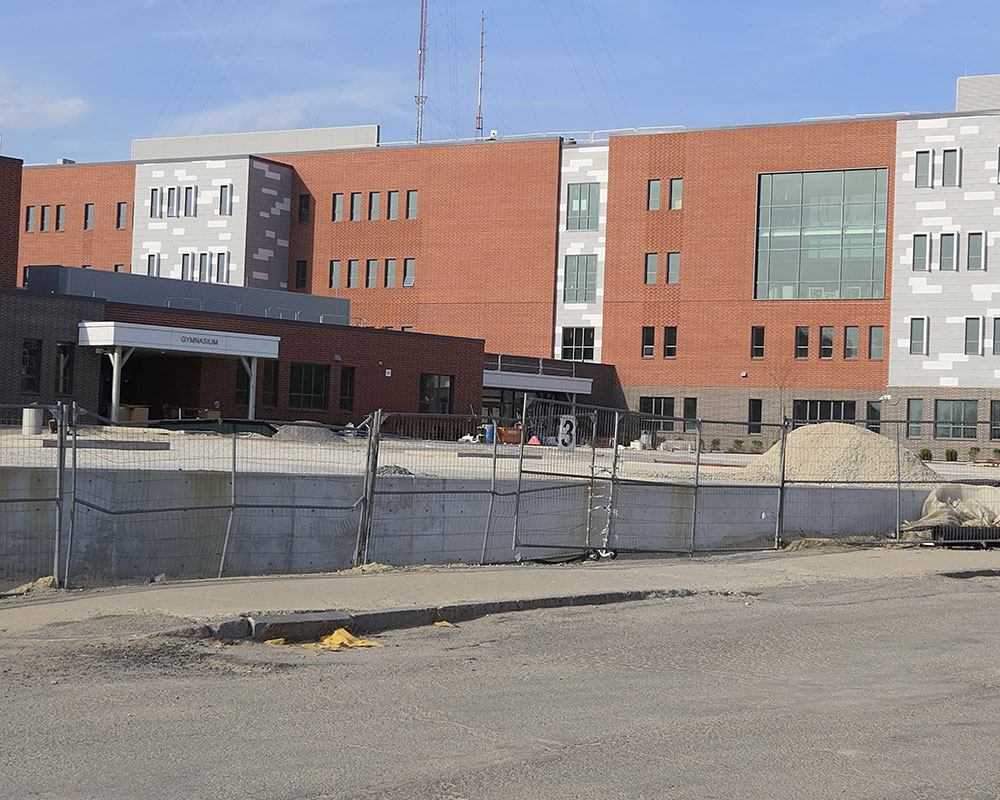
Haverhill’s new Dr. Albert B. Consentino School will have an independent review of odors, attributed to several causes, following union complaints over safety protocols.
Members of the Haverhill Education Association won buy-in Thursday from school Superintendent Margaret Marotta and the full School Committee for an outside evaluation of communication odor source at Haverhill’s newest school. The odor, from such possibilities as sewer gas, natural gas leak or an industrial fluid, brought concern by Union Vice President Maria Martinez Geoffroy. She told School Committee members during public comment some staff reported feeling ill.
“We are here to share concerns about the lack of urgency in responding to the smell and the confusing protocols and communications that occurred during the evacuation,” she said.
She noted school staff reported odors and a potential gas leak several times between August and November with two incidents leading to evacuations. “Students and faculty would not have been safe had a gas explosion occurred given such proximity to the school, and it was unclear which evacuation location to even go to,” she added.
Breaking from protocol where School Committee members typically refrain from responding to public comments, two School Committee members called for a suspension of the rules to allow action on a matter not on the agenda. The motion by at-large School Committee member Josiah E. Morrow, with backing from Ward 3 member Maura L. Ryan-Ciardiello, succeeded.
Facilities Director Stephen D. Dorrance told board members he learned just that day odor came from sewer gas in a boiler room with 10 floor drains that were lacking necessary fluid seals in their traps. He acknowledged there were also minor gas leaks—two inside of boilers and another in a water heater because fittings weren’t tightened. He said these leaks were not the cause of the odor.
“The problem is absolutely solved beyond any reasonable doubt,” he said.
Marotta pointed out one of the early suspected causes was glycol, an industrial fluid used in heating systems. She agreed there were communication problems, described as, “overwhelming in a brand-new school.” Marotta said the school has two different evacuation sites, including one off-campus, depending on the type of drill or emergency.
“Information got out that was incorrect and it confused people, and it was nerve wracking certainly for the staff and the students being a little bit unclear what was going on,” she said.
The superintendent said she prefers an outside, independent investigation because she wants everyone to “have faith in the new building.”
Led by Ward 1 School Committee member Mirca Zoraida Rivera and Morrow, the board voted to approve the review of both building issues and communication.