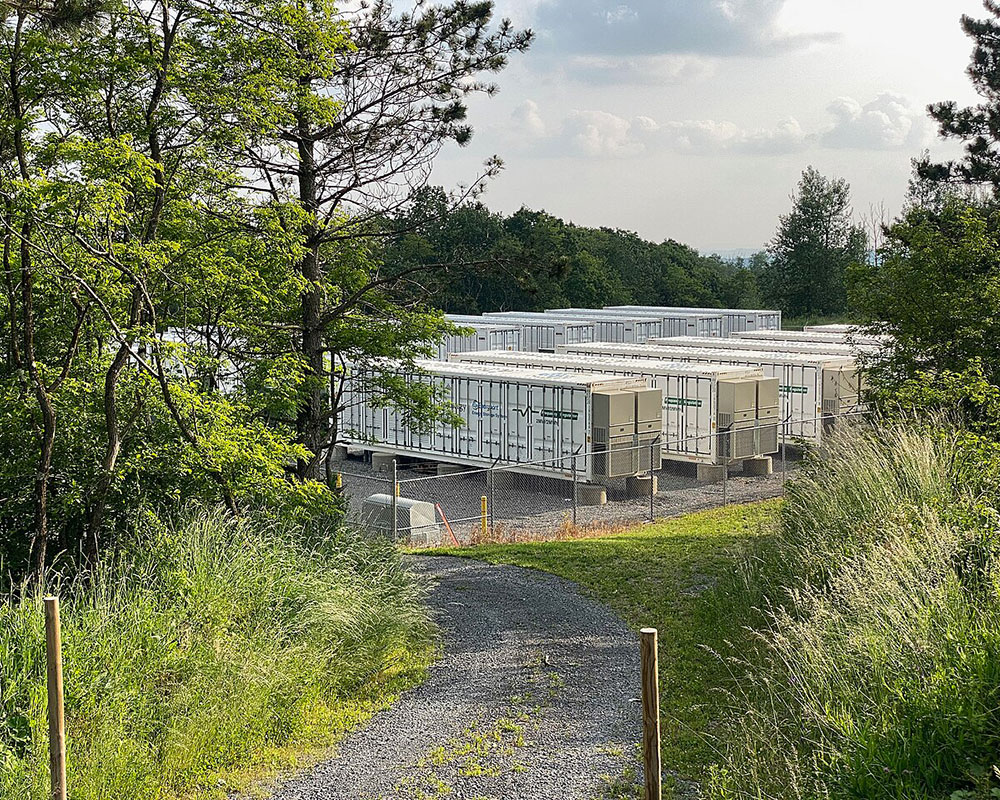
Haverhill city councilors last night put the brakes on two controversial measures—construction of data centers and Battery Energy Storage Systems—that have been the subjects of rising national scrutiny.
The Haverhill City Council, at the urging of Mayor Melinda E. Barrett, voted to refuse allowing data centers to be located anywhere in the city by omitting them from zoning tables. Barrett explained several city councilors asked about imposing a moratorium on such centers, but she instead called for an outright ban because of power grid strain. The mayor cited an instance where there already is not enough electricity.
“We currently, and we will for the foreseeable future, not have the grid capacity to handle that. The (downtown) parking garage is supposed to have chargers for cars on it. The grid can’t get that much power over there,” Barrett said.
Further, the mayor also cited “considerable” water draw, at least from older style data centers. Data centers, necessary for many artificial intelligence applications, have also received criticism for potentially pushing up electric bills and creating noise. Councilor Ralph T. Basiliere said he is one of those seeking a moratorium.
“I think the most important thing in here is the data center prohibition. We’re in climate change. We’re in a drought. We have water problems up to our eyeballs,” he said.
Councilors voted 10-0 against, with Councilor Melissa J. Lewandowski absent.
Councilors also opted to withdraw plans for a Battery Energy Storage Systems zone on a 20-acre site off Hilldale Avenue—ahead of exploring a moratorium.
Daniel Brosnan, 51 Monument St., said the proposed Hilldale Avenue site has no nearby interstate highway access.
“Every day I see numerous tractor trailer trucks, semi-trucks going up and down the street. Now, garbage trucks that aren’t taking care of Haverhill, but they’re coming off the highway to go to their location on Hilldale. I would ask the City Council to really consider how much more traffic can we handle?”
Dana Wildes 700 Hilldale Ave., further pointed to inadequate water service for firefighting and the area’s closeness to Little River, where any contaminants could be carried through the center of the city.
City Solicitor Lisa L. Mead, responding to McGonagle’s suggestion to consider a moratorium, agreed the idea will give the city more time. She recommended councilors take up the matter at its Dec. 1 meeting.
Council Vice President John A. Michitson observed the political winds will cause state officials to back away from incentives to attract such battery storage system sites. Other members calculated the chances are low that existing land owners—the MBTA and New England Tractor Training School—would sell.
Zoning actions came during a hearing suggested by Planning Director Jacki Byerley to make mostly routine administrative corrections and adjustments.
One change, however, allowing three-family home to be built by right in residential urban zones brought a concern by Ward 5 Councilor Shaun P. Toohey. He noted councilors denied a three-family on Marshland Street last week in a residential high-density zone. He said he prefers to keep the special permit requirement. Byerly responded, the city’s housing production plan, approved in April, calls for the strategy in residential urban zones.
Toohey received backing from Basiliere, Ward 6 Councilor Michael S. McGonagle and Ward 7 Councilor Catherine P. Rogers, but the majority disagreed.
In other business, plans by Pentucket North Development to build six duplexes and two single-family homes, for a total of 14 residences, on a portion of land owned by Cedardale, 931 Boston Road, was again postponed. The delay was requested Monday afternoon by the developer and will now be heard Tuesday, Dec. 1.