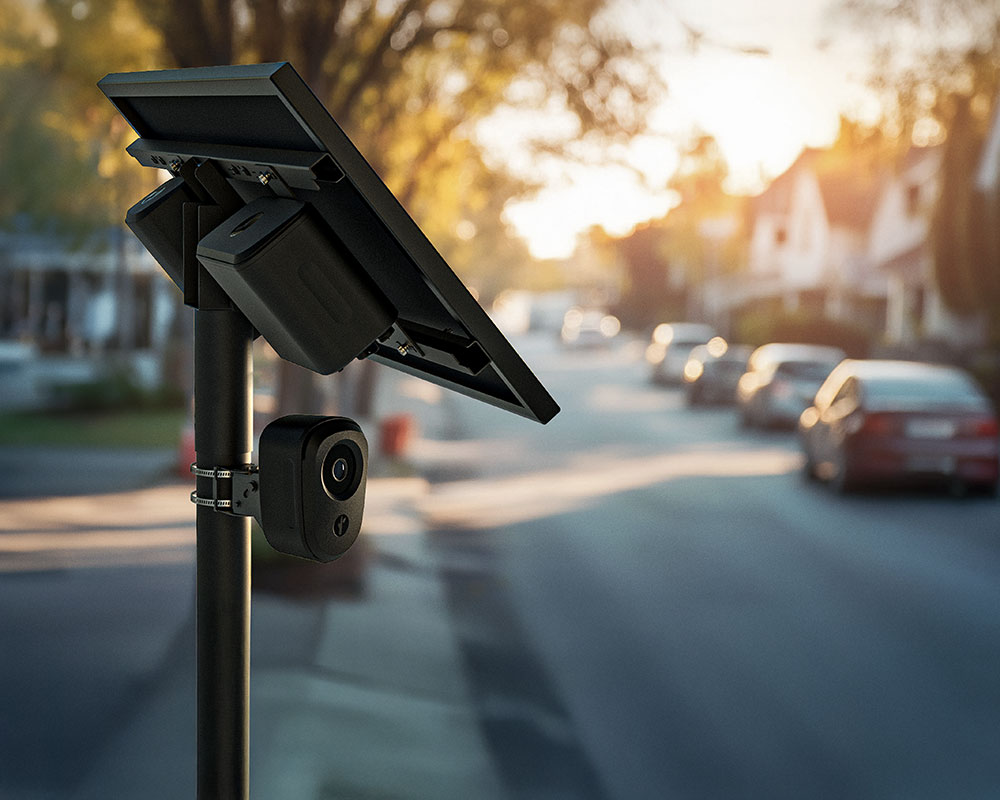

With one vocal exception, Haverhill city councilors agreed Tuesday night the city’s Flock license plate readers are a valuable tool, but expressed worries about how data might be used.
After 90 minutes of discussion before a standing room only crowd, councilors also agreed strict guidelines must be in place to prevent misuse of surveillance cameras. Members voted unanimously to ask City Solicitor Lisa L. Mead to draft an ordinance spelling out how cameras can be used and what guardrails are needed. They also voted to send the matter to the council’s Public Safety Committee for further study and debate.
Similar to the technology used to collect highway tolls, Flock cameras have proliferated in recent years as a policing tool because they transmit the location of a specific vehicle in real time. Data is then store for future investigations. At the same time, the systems have prompted controversy across the country over how long the data is stored and who has access.
Haverhill Mayor Melinda E. Barrett invited acting Deputy Police Chief Meaghan Paré to explain how the system is used here. Paré reported the city has 19 Flock cameras installed at entrances to the city and downtown. The system has been in place since 2023. She added license plate readers helped the department solve at least 20 crimes that likely wouldn’t have been resolved. Besides plate readers, Paré noted the city operates 210 street cameras that capture video.
Vice President John A. Michitson said that while he generally agrees the system is useful, he asked about the potential for cyber intrusions and guardrails to prevent misuse. Paré responded officers are trained on allowed uses and Flock provides an audit trail of every inquiry. She pointed cameras don’t identify drivers. While the city shares data with 30 other Massachusetts communities with Flock systems, she added, Haverhill does not provide information to federal officials or across state lines.
A Flock representative remotely reported the company doesn’t sell data.
Ward 4 Councilor Melissa J. Lewandowski agreed the system is an effective tool, but the public is right to question whether the network is being used for mass surveillance. She proposed the police department establish a website where the public can see how the system is being use and report any potential misuse.
“At the end of the day this technology solves crimes. I look at the facts that were presented today and I’m in support of us utilizing this technology to continue to keep our public safe and our officers safe. That said, I also am in support of going a little bit further in what we put in place for guardrails around this in order to make it more transparent for the public, in order to have a portal the public can jump on if they feel there is misuse and to codify that,” she said.
Ward 3 Councilor Devan M. Ferreira, however, said she can’t support the technology because the city is giving data to a private company over which city officials and the public have no control.
“By giving access to this company, even to collect our aggregate, anonymous data, we are giving a private corporation access to how our community operates, what happens here, what people are doing, where our heavily traveled roads are and how people come and go. I am not comfortable with that,” Ferreira said.
She suggested instead the city survey other similar license plate reader systems to see its options.
Council President Timothy J. Jordan allowed six members of the public to speak. Leah Allen said she thinks the Council shouldn’t dismiss out of hand concerns about privacy even if there is general agreement there is no reasonable expectation of privacy when using city streets. Elizabeth Hamel said she isn’t “completely against” the cameras but wants to know the city’s costs.