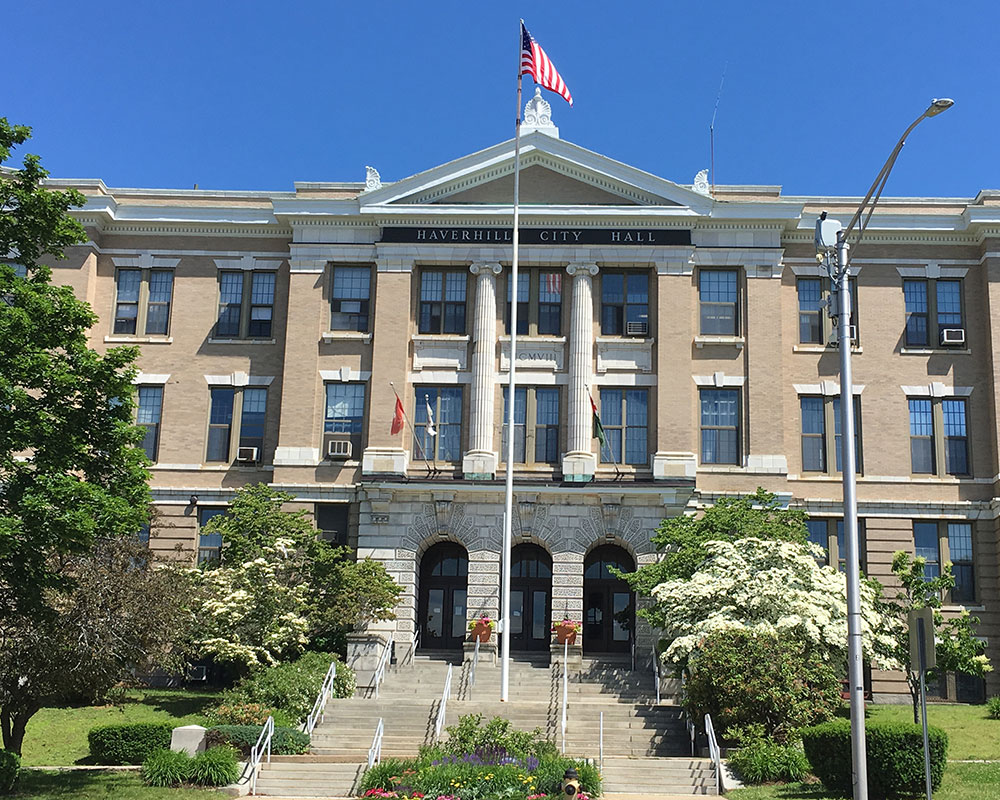

On a tense 6-5 vote Haverhill’s City Council agreed Tuesday night to maintain the current 65-35 split in the way property taxes are divided between business and residential property owners.
The vote means the average single-family homeowner with a house valued at $561,903 will see an increase of $263 this year—$36 less than the increase of $299 projected when Mayor Melinda E. Barrett unveiled this year’s spending plan in May. The decrease is due to a modest increase in the total value of property in the city. The city gained $148,859,985 in property value, also known as “new growth,” providing $1,991,431 in tax levy growth, according to Christine M. Webb, the city’s chief assessor.
While the City Council’s vote was on the city’s tax rate for the current year, the discussion centered on how best to spur economic growth in the city. Noting Haverhill has lost businesses in the last several years, Greater Haverhill Chamber of Commerce President Katie Cook argued the best way to bring more business into the city is by shifting more of the property tax burden from businesses to homeowners. Currently about 11% of real estate in the city is classified as commercial.
“If we get ourselves out of the market for being able to draw businesses into town, we’re never going to get that reprieve, our residents will never get the reprieve because we won’t have a larger tax base to be able to levy from,” Cook said.
Supporting her were both City Council Vice President Timothy J. Jordan and at-large Councilor John A. Michitson who agreed enlarging the tax base will ultimately help residential taxpayers as well as job seekers.
“When you look at the average tax bill, despite these increases, we’re still the second lowest residential tax rate in all of Essex County, 35 or 36 communities. There is only one community, if your whole thing is about paying lower taxes, that you could go to in this area and that’s Lawrence,” Jordan observed.
Ward 1 Councilor Ralph T. Basiliere supported the current split, pointing out the city’s crime rate dropped 21% in the last year.
But, Ward 4 Councilor Melissa J. Lewandowski, Ward 5 Councilor Shaun P. Toohey and Council President Thomas J. Sullivan all spoke in favor of giving homeowners a break this year.
“I would have like to have given the residential class a little bit of a break this year. I think they deserve it. As Councilor Lewandowski pointed out, our residents are hurting, our homeowners, some of them are hurting, and we’re not being overly sensitive to that this evening,” Sullivan said.
Ward 3 Councilor Katrina Hobbs Everett also voted against the current split, but she said she doesn’t think it is Haverhill’s tax structure that is discouraging economic growth. Instead, she cited an unfriendly atmosphere for businesses owned by people of color.
“Many businesses I have known have come in and left, but it is not because of the tax bracket. It is because of racial tensions and the lack of an inclusive network. This impedes our local capacity for economic growth,” Hobbs Everett said.
Voting in favor of maintaining the 65-35% split along with Basiliere, Jordan and Michitson were Ward 2 Councilor Devan M. Ferreira, Ward 6 Councilor Michael S. McGonagle and at-large Councilor Colin F. LePage. Voting against with Lewandowski, Toohey, Sullivan and Hobbs Everett was Ward 7 Councilor Catherine P. Rogers.
In other business, city councilors tabled until its next meeting Dec. 2, a request from Barrett to hire an outside attorney to advise on matters related to the Whittier Regional Vocational Technical High School charter. Barrett said the city’s law firm of Mead Talerman & Costa represent other communities in the Whitter Tech district and therefore have a conflict of interest.