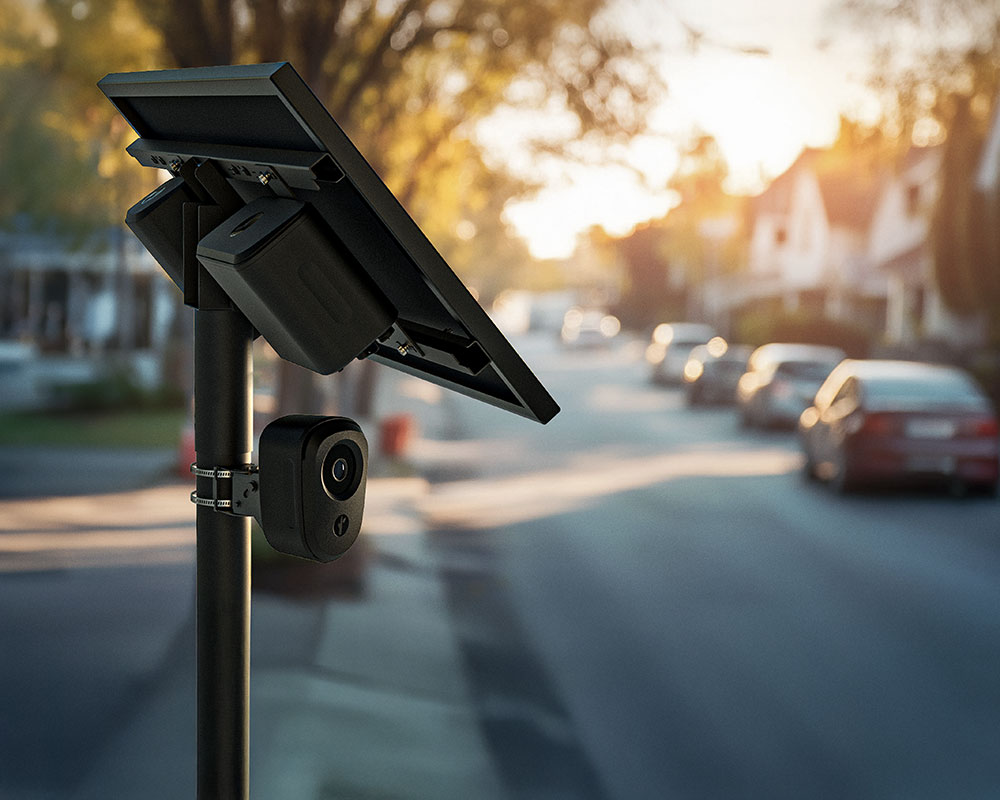

Haverhill is moving to cancel its contract with Flock Safety, which has recently become controversial, but still plans to roll out safety measures to regulate whatever system might replace it.
Mayor Melinda E. Barrett’s office said Thursday the city asked the company, which has supplied automatic license plate readers to the city since 2023, to remove the cameras. While the mayor’s office said an internal review of how the cameras are used shows no misuse, “the city found that Flock’s technology itself does not provide enough necessary safeguards to protect residents’ privacy.”
“To balance public safety needs with the privacy rights of Haverhill residents, the city will continue conducting a thorough review of all law enforcement tools and guardrails in partnership with the Haverhill City Council,” a statement said.
“Stronger protections against mass surveillance” is one of the reasons the Haverhill Chapter of the Merrimack Valley Project plans to demand removal of the cameras. As WHAV reported, the local advocacy group plans to assemble next Thursday on the steps of Haverhill City Hall ahead of a City Council subcommittee’s plan to consider guardrails on the technology.
In its own statement, the Haverhill Police Department said “public perception” is driving the call to replace the cameras, despite the their “significant investigative value.” The department noted the license plate readers “have assisted officers in identifying suspects, developing investigative leads and solving crimes. This technology has provided meaningful benefits to the department and has been a valuable tool in supporting public safety.”
Ward 1 City Councilor Ralph T. Basiliere told WHAV he took notice of last month’s ruling by U.S. District Court Judge Sara E. Hill in Oklahoma that continuous use of the technology constituted an illegal, warrantless search.
“It’s not wise doing business with an imploding company and the recent Oklahoma precedent changes the math dramatically,” Basiliere said.
Meanwhile, however, the Council’s Public Safety Committee still plans to discuss proposed restrictions on the use of all similar technology when it meets Thursday, Nov. 12, 6 p.m., in City Hall. These were described by Barrett’s office as “additional potential guardrails and oversight requirements for any future (automatic license plate readers).
Following an Aug. 11 public debate on the technology, Ward 3 Councilor Devan M. Ferreira suggested the Committee discuss the matter and make recommendations to the full Council.
Police said it and the current system already employs safeguards such as limiting access to data, keeping data separate from the department’s internal network, requiring users to “a documented purpose,” reducing historical data retrieval to a maximum of two weeks and discontinuing the sharing of camera data with other communities and outside agencies.