

To submit school announcements, click on image.
Officials representing the 11-member communities that make up Whittier Regional Vocational Technical High School made little progress Thursday towards an agreement that could increase Haverhill’s share of any future school construction costs.
Bernard Cullen, Rowley’s representative on the Whittier Tech School Building Committee, said Thursday he continues to believe Haverhill must agree to bear a greater share of capital costs to build a new school. He said the current formula, which has been in place for more than 50 years “makes no sense to me and would not fly in Rowley.”
In response, Haverhill Mayor Melinda E. Barrett said she is willing to consider a compromise proposed by Salisbury Town Manager Neil Harrington that would incorporate into the formula the number of students each community sends. Calling Whittier Tech “an important asset to the community,” Barrett said, she needs more time to study Harrington’s suggestion in detail.
One option Harrington offered is to compute 50% of each community’s share of capital costs based on the current formula and 50% of each share based on the number of students each community sends. That plan would put Haverhill’s total share at 54% instead of 44% as it is specified in the 1967 agreement among the communities.
While Haverhill pay 44% of capital costs, it will send 66% of the school’s students next year. The current capital cost distribution formula is based on each community’s total kindergarten through grade 12 enrollment. By comparison, day-to-day operational costs are allocated based on the number of students each community sends to the school.
Under the terms of the district’s governing compact, all 11 communities must agree unanimously to any changes in the formula.
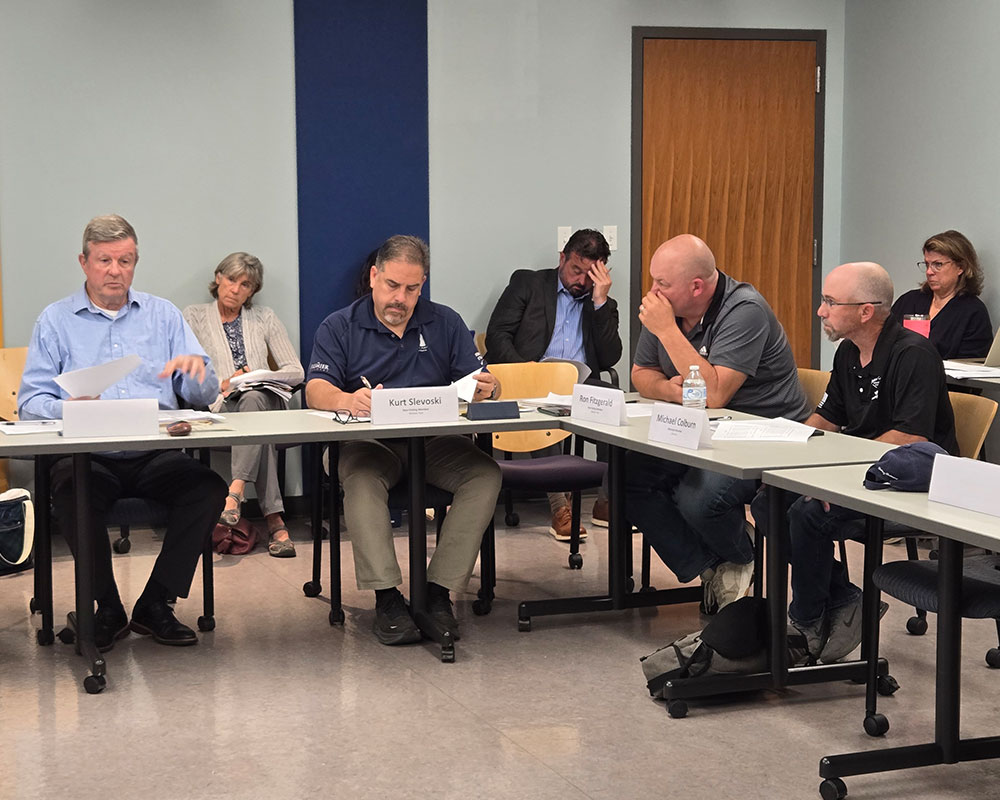
Cullen’s comments and the mayor’s reaction came during a meeting of the Regional Agreement Amendment Committee, a group of municipal officials charged with updating the compact which governs the regional district. The Massachusetts School Building Authority made a new agreement a condition of state support for a new school, according to a Dec. 12, 2024 letter signed by Executive Director Mary L. Pichetti. The amendment committee has been meeting for the last six months.
Harrington suggested one way to decrease the cost of a new school on all taxpayers would be to request a one-time $30 million payment from money the state has collected through the voter-approved millionaire’s tax. But, he argued, that unless Whittier communities unanimously agree to a new cost sharing formula, pursuing a new school is not viable and that communities would bear even greater costs renovating the current school.
Whittier Tech is pursuing repair or replacement plans, including building a new school on the Haverhill campus of Northern Essex Community College. The idea of a joint campus surfaced after all communities, but Haverhill, overwhelming voted in January of 2024 against building a new $445 million school at the current location.
In addition to Haverhill, Rowley and Salisbury, the other members of the Whittier district are Amesbury, Georgetown, Groveland, Ipswich, Merrimac, Newbury, Newburyport and West Newbury.
A unique expense the district faces if it remains at its current location at 115 Amesbury Line Road in Haverhill is replacing its failing sewage treatment plant. Moving to Northern Essex could bring savings by not having to build new athletic fields immediately.
As WHAV previously reported, other aspects of the agreement under discussion are conditions under which a community can withdraw from the district and the start and end dates of school committee members.
West Newbury Town Manager Angus G. Jennings, who chairs the RAAC, said he is hopeful the committee will have an interim report to send to the full Whittier School Committee by the end of July. He said the school committee is facing a deadline of the end of 2026 to come up with a new draft regional agreement in order to move into the design phase for a new building. The agreement would then have to be adopted by all of the legislative bodies of each community—city councils in the case of cities, and town meetings in the case of towns.