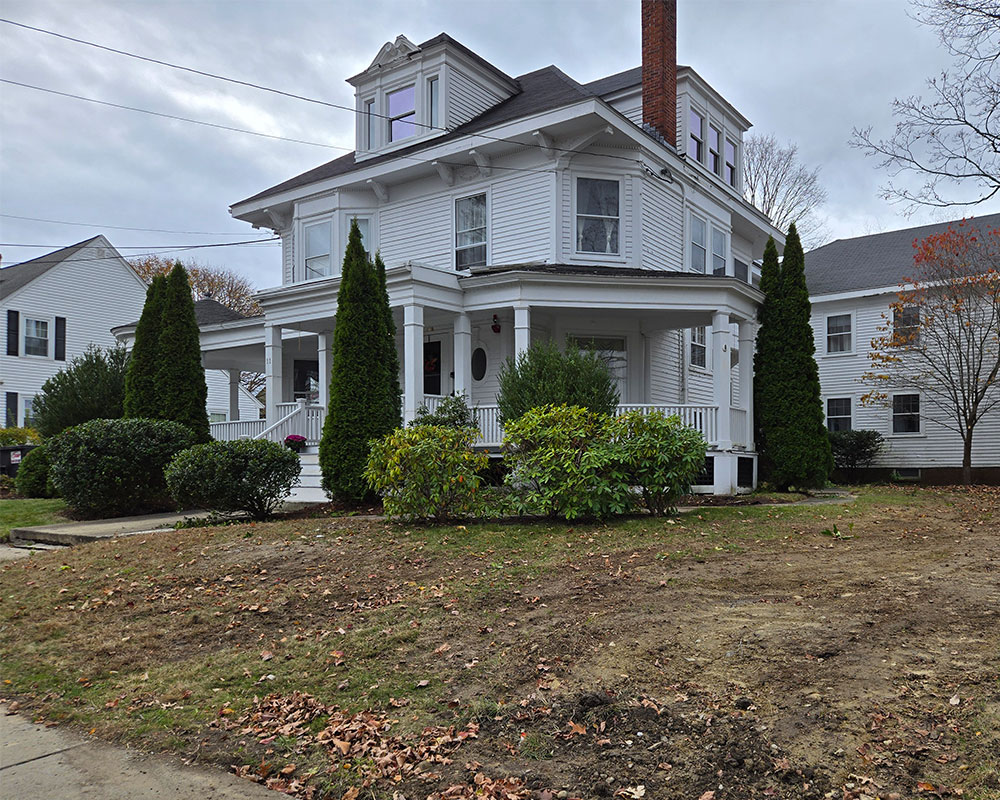

(Additional photographs below.)
Riverbend Bradford, a planned recovery home in Haverhill for 24 adult men who are both recovering from substance abuse and have mental health challenges, is opening its doors to the public for tours Sunday, Nov. 16.
Tours will be offered from 3-4 p.m., at 11 Kingsbury Ave., according to Program Director Kyle Evans. The open house marks the second time in a week Riverbend has opened its doors to the public. Neighbors were invited in last Tuesday after 1,200 people signed a petition protesting the group home. Following the tour, the petition campaign’s spokeswoman said she concluded neighbors can’t stop the project.
“We understand the need, but we are amazed how facilities like this can just pop up anywhere. We just don’t think this is the best location. Our property values are going to plummet.”
Riverbend invited WHAV to tour the house Thursday, but did not immediately disclose open house plans. When asked Friday, Evans confirmed a report of a planned open house.
“We will be here to explain our program, show off the house and answer any questions and concerns,” Evans told WHAV. “We will stay as late as necessary.”
Riverbend officials said they expect to accept the home’s first residents next month and is awaiting a city occupancy permit. Evans said because the house is considered an educational institution, it is neither required to have a commercial kitchen nor designated parking. A fire suppression sprinkler system was installed and doors have been widened to make bedrooms and bathrooms compliant with the Americans with Disabilities Act.
Vice President of Operations Victoria Nesto said the need for the type of residential recovery home Riverbend offers is so great she has already received 32 referrals. She said in most cases the residents will have some prior tie to Haverhill. Referrals come from a variety of substance abuse programs and social service agencies including NFI and Spectrum in Haverhill, state Department of Mental Health, court system and Department of Corrections. Treatment programs in mental health parlance is considered “co-occurring enhanced.” Nesto told WHAV that means residents must have both a substance abuse as well as a mental health diagnosis, said.
“They must be stable enough to live in this type of setting,” Nesto said. “At any given time, we will have at least two staff members in the house. During the day will have six to eight staffers including a full-time nurse and then two to three staff overnight.”
Residents are offered a “robust” menu of classes ranging from counseling sessions to gardening, cooking and woodworking, Evans said. Residents will also be encouraged to participate in programs offered by its sister Ray of Light Recovery Café, 222 Washington St. It is described as “a member-driven, peer recovery support center.”
“The goal is to prepare our residents to re-enter society so we will be helping those who are able to find jobs or volunteer opportunities,” Nesto said, noting that the house’s location on the MeVa Transit bus line made it particularly attractive because residents are not permitted to own cars.
Evans said he is proud of the warm and homey feeling the sprawling 15-bedroom Victorian mansion offers. Built in 1890, the structure has been used as both a single-family home as well as offices for the old Bradford College.
“Whenever we could we kept the historic details and aesthetic,” Evans said noting that much of the wallpaper that was in the house when Riverbend began renovating it remains. Many of the bedrooms have built-in bureaus and bookshelves.
Nesto said a friend alerted her to the real estate listing when the property went on sale last year and after touring it, she knew it would work as a recovery home. She said Riverbend then found an investor, Jay Stamp of Dracut, who purchased the property for $959,500 last February and agreed to lease it back to her agency.
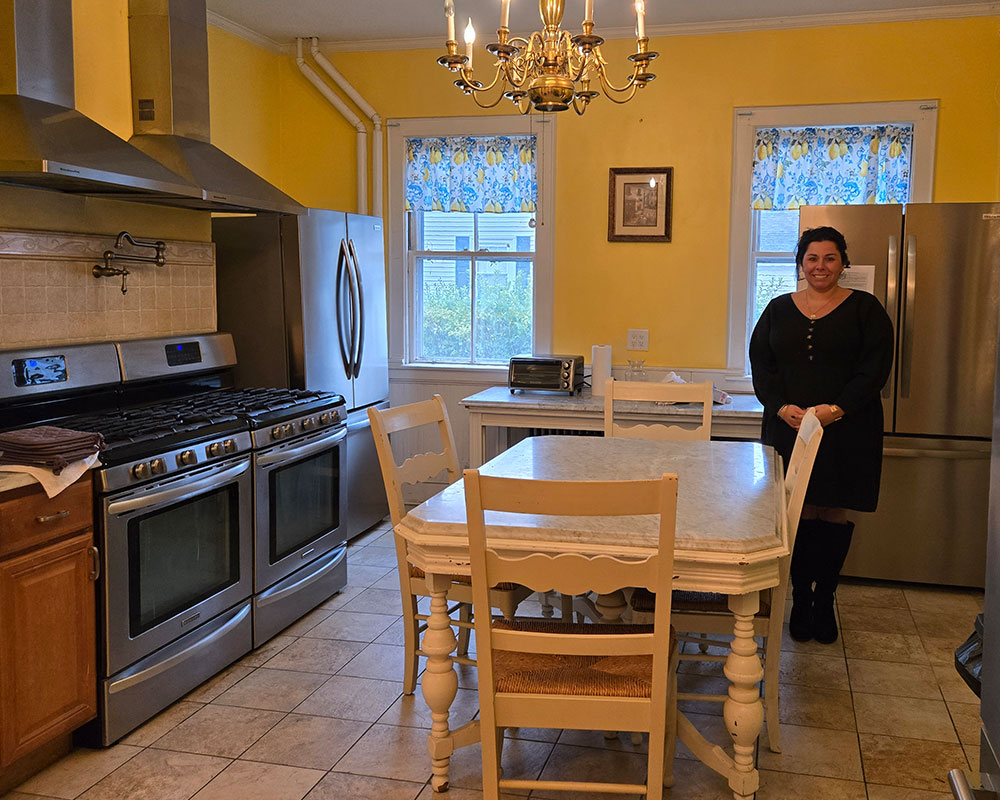
Riverbend Vice President of Operations Victoria Nesto stands in the kitchen of the new Riverbend Bradford House. The transitional addiction treatment house can accommodate up to 24 adult men who have a dual diagnosis of substance abuse and moderate to severe mental health issues. The average length of stay is six to nine months. (WHAV News photograph.)
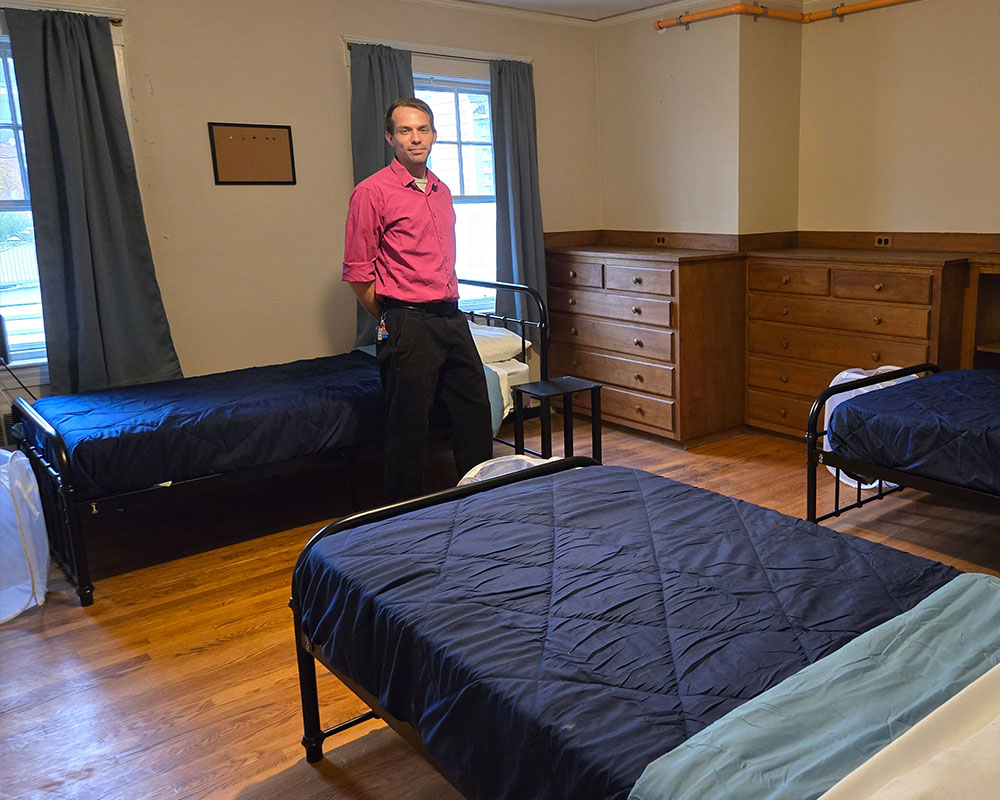
Riverbend Program Director Kyle Evans stands in one of the bedrooms of the newly renovated Riverbend Bradford House. The transitional addiction treatment house can accommodate up to 24 adult men who have a dual diagnosis of substance abuse and moderate to severe mental health issues. The average length of stay is six to nine months. (WHAV News photograph.)